Headstrong is a piece where the title could be used to describe him, or me. That’s what it took for both of us to make it to the end of this piece. I am a wildlife artist, however, after years of clients requesting me to draw this particular animal, a Texas longhorn, I stepped outside of what I wanted to do and got to work on it. I was excited to try something new and see what challenges it would bring me.
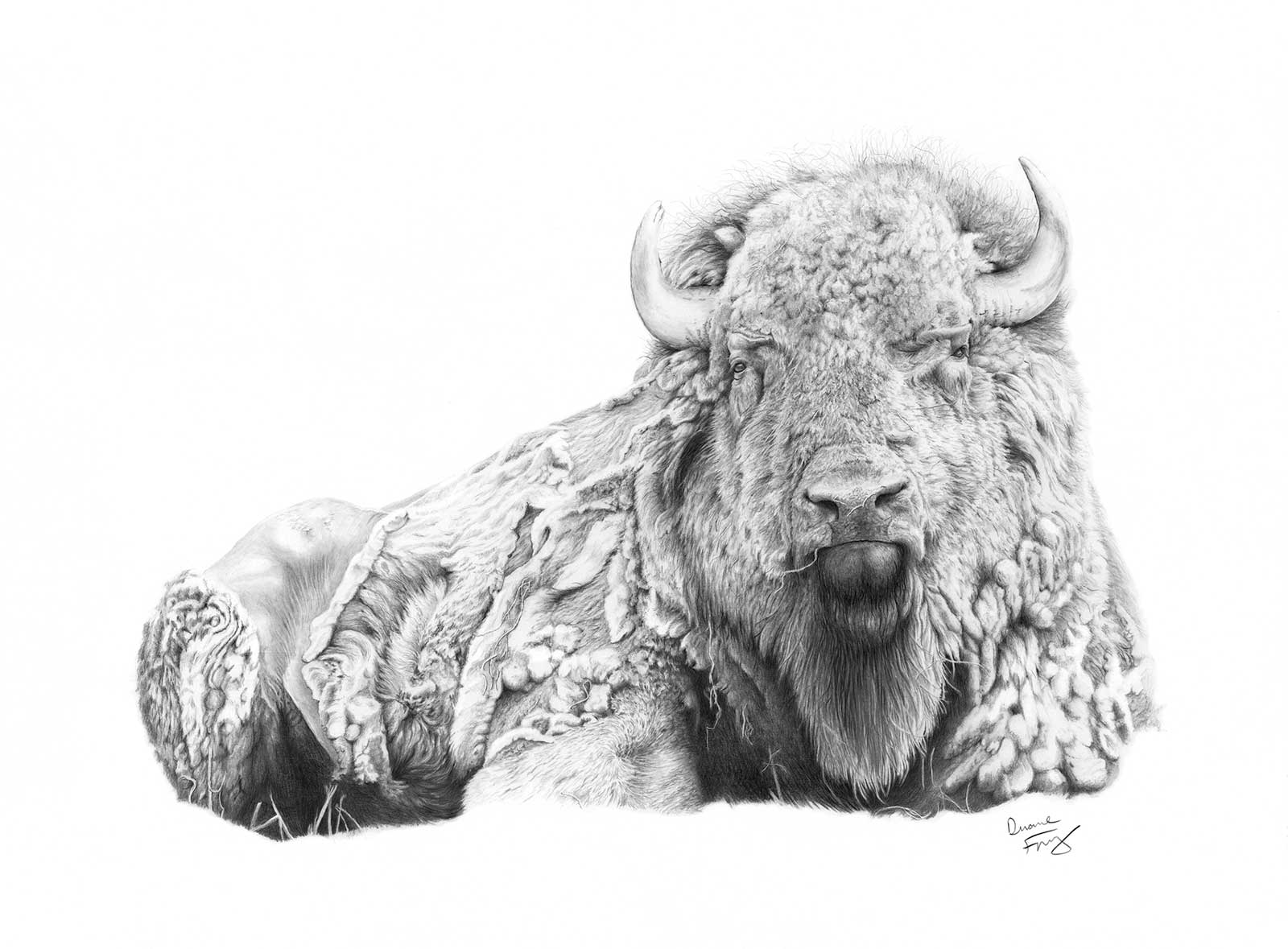
Legendary, graphite, 17 x 23" (43 x 58 cm)
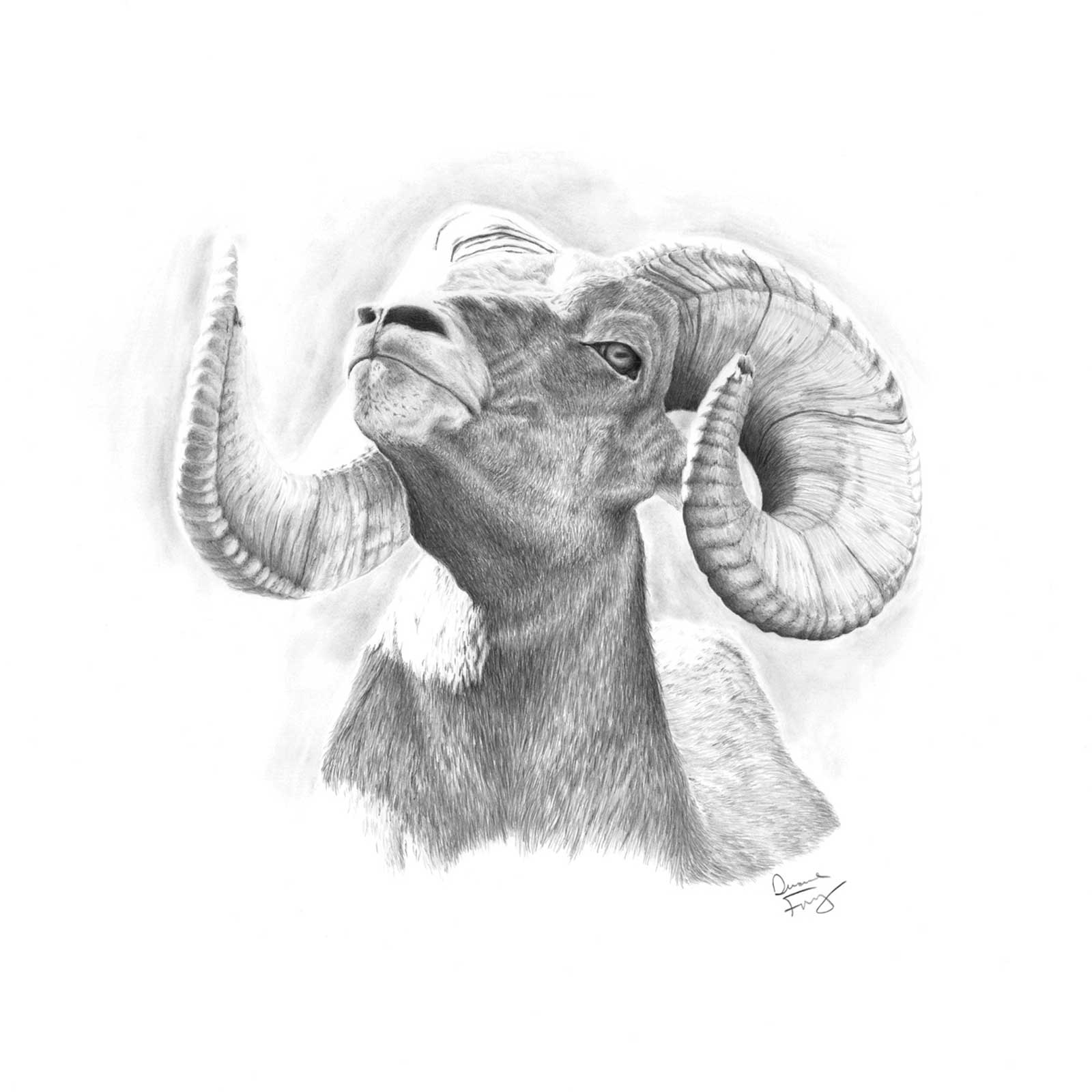
Fearless, graphite, 15¾ x 15¾" (40 x 40 cm)
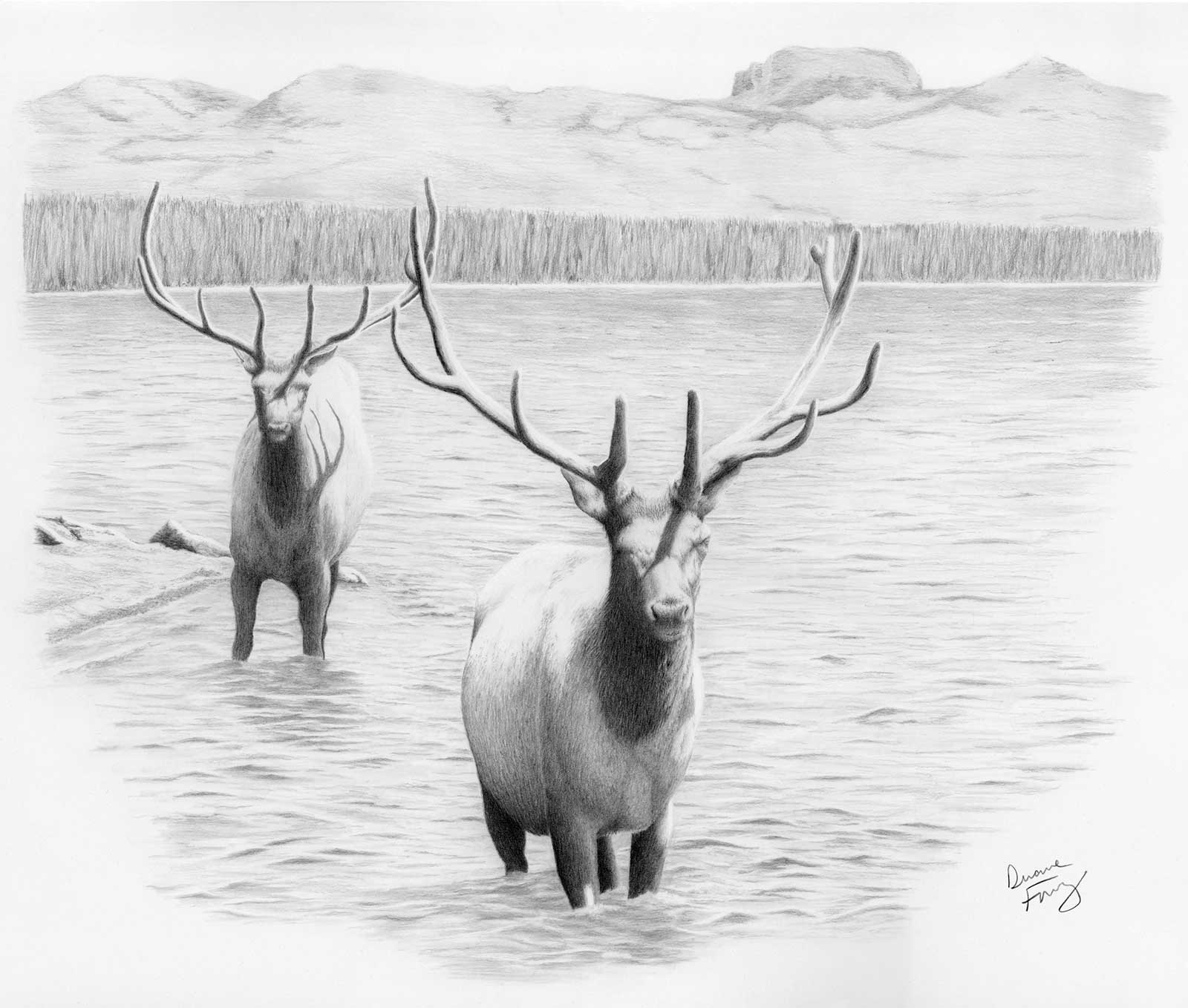
Cool Down, graphite, 19 x 24" (48 x 60 cm)
Before pencil ever reached paper, I spent hours in the field searching for a subject that I wanted to capture on paper. The animal must have a soul, an attitude, or project a feeling. The longhorn I settled on for Headstrong delivered all of these. He was lazily grazing when I decided he was it, and I needed to get some reference photos. The minute I stepped out, he turned his head and stared me down, letting me know that was as far as I was going to make it. I took multiple photos for reference: his habitat, high and low light shadowing, how he interacted with his herd, etc. Now the planning for the piece could begin. Where was the best location to place him within the composition? Where would the eye flow to? What new techniques could I use to capture him? One thing I never anticipated was the struggle that would come to get him on paper.

My Art in the Making Headstrong
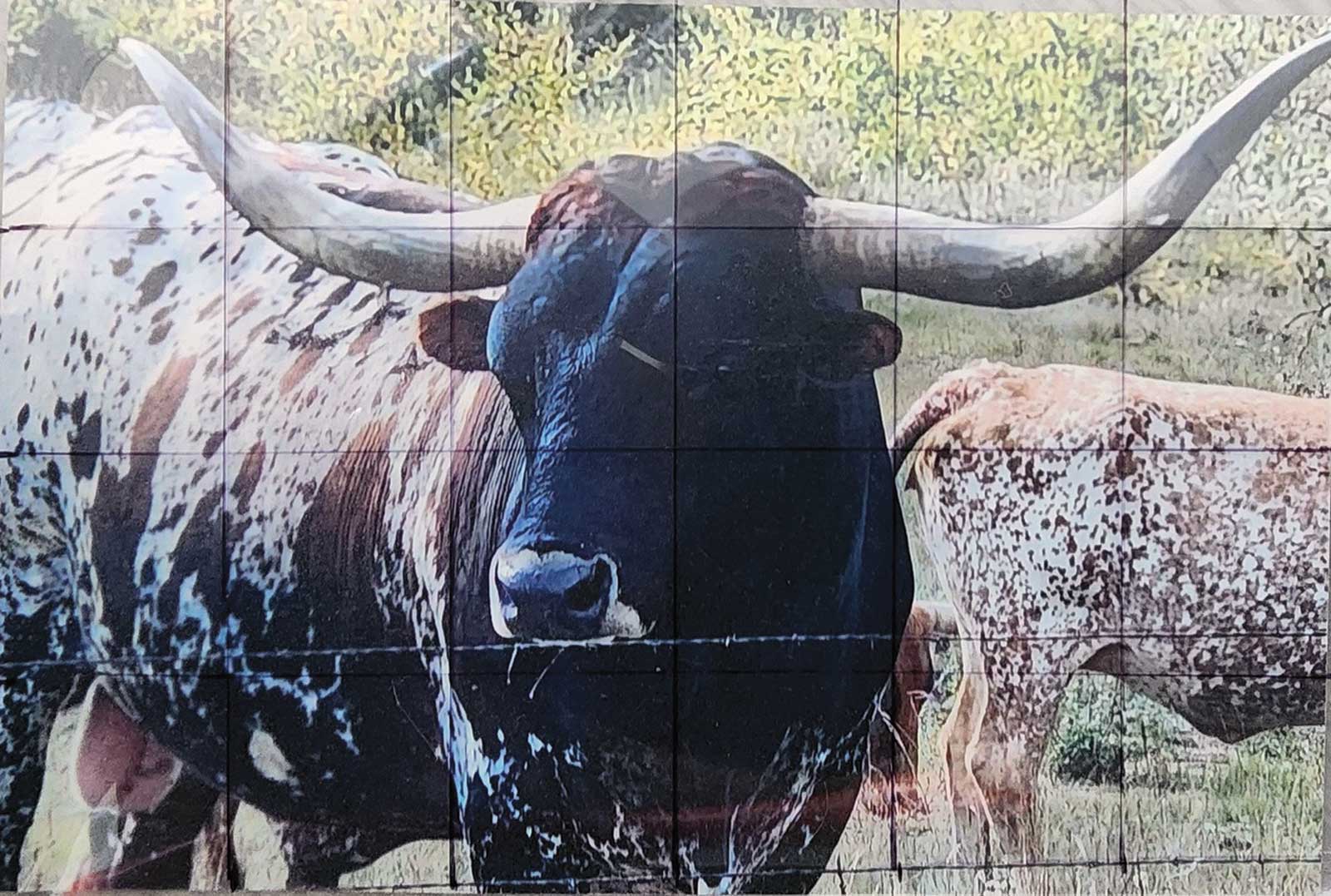
Stage 1 Grinding It Out
To help accurately represent proportions and placement, I draw a 1x1" grid on a clear envelope that I can slide the main photo into.
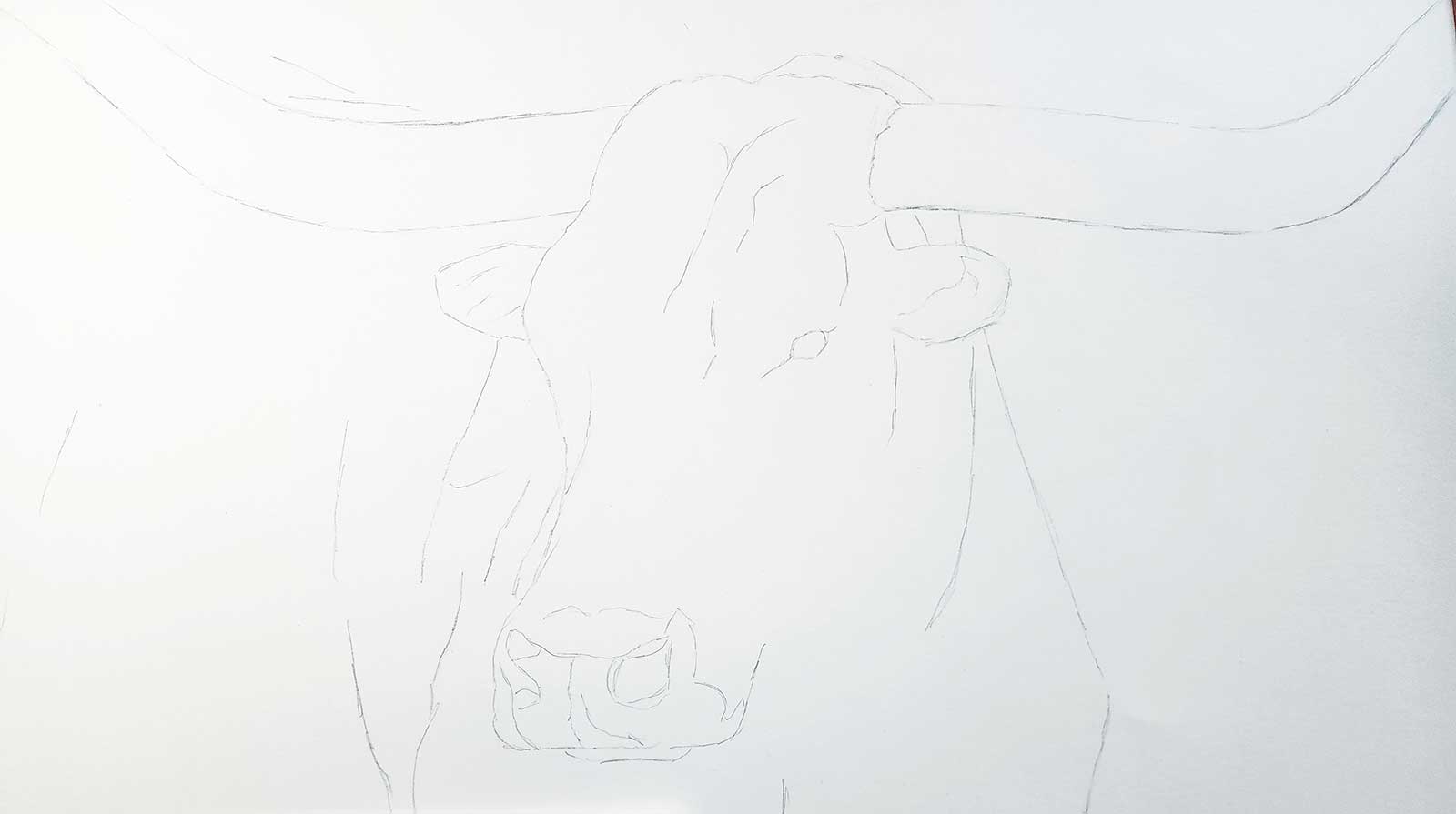
Stage 2 Paper to Pencil
Using the grid, I have lightly free-hand drawn the subject to Strathmore paper. I recommend, until you are comfortable visualizing the grid on your final paper, you may need to lightly grid that paper to scale for accurate proportions.
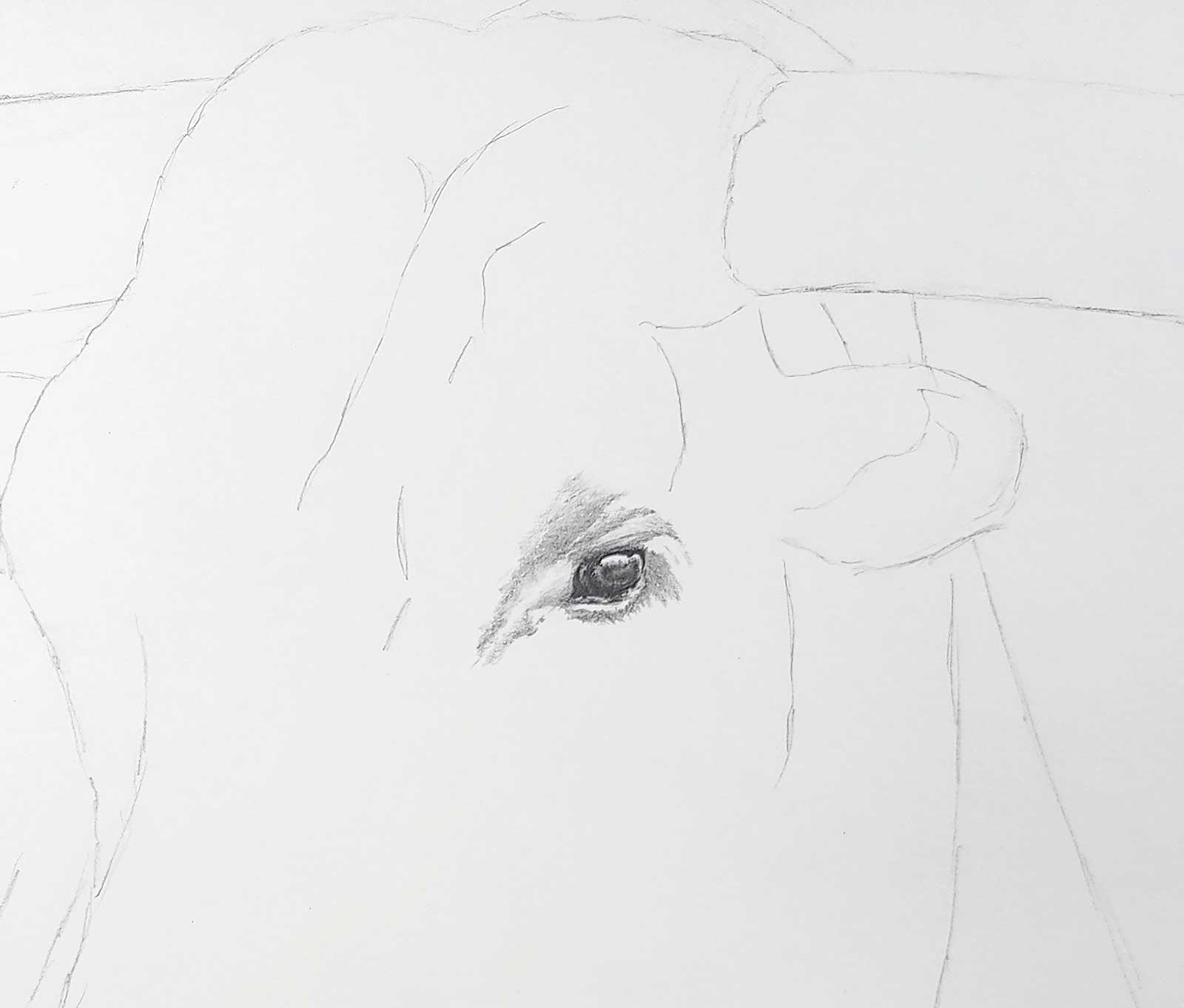
Stage 3 The Eyes
The eye of the animal is always my starting point. If I don’t feel as though I have captured the intensity, story or soul of the animal in it, the project is over regardless of the hours put into it.
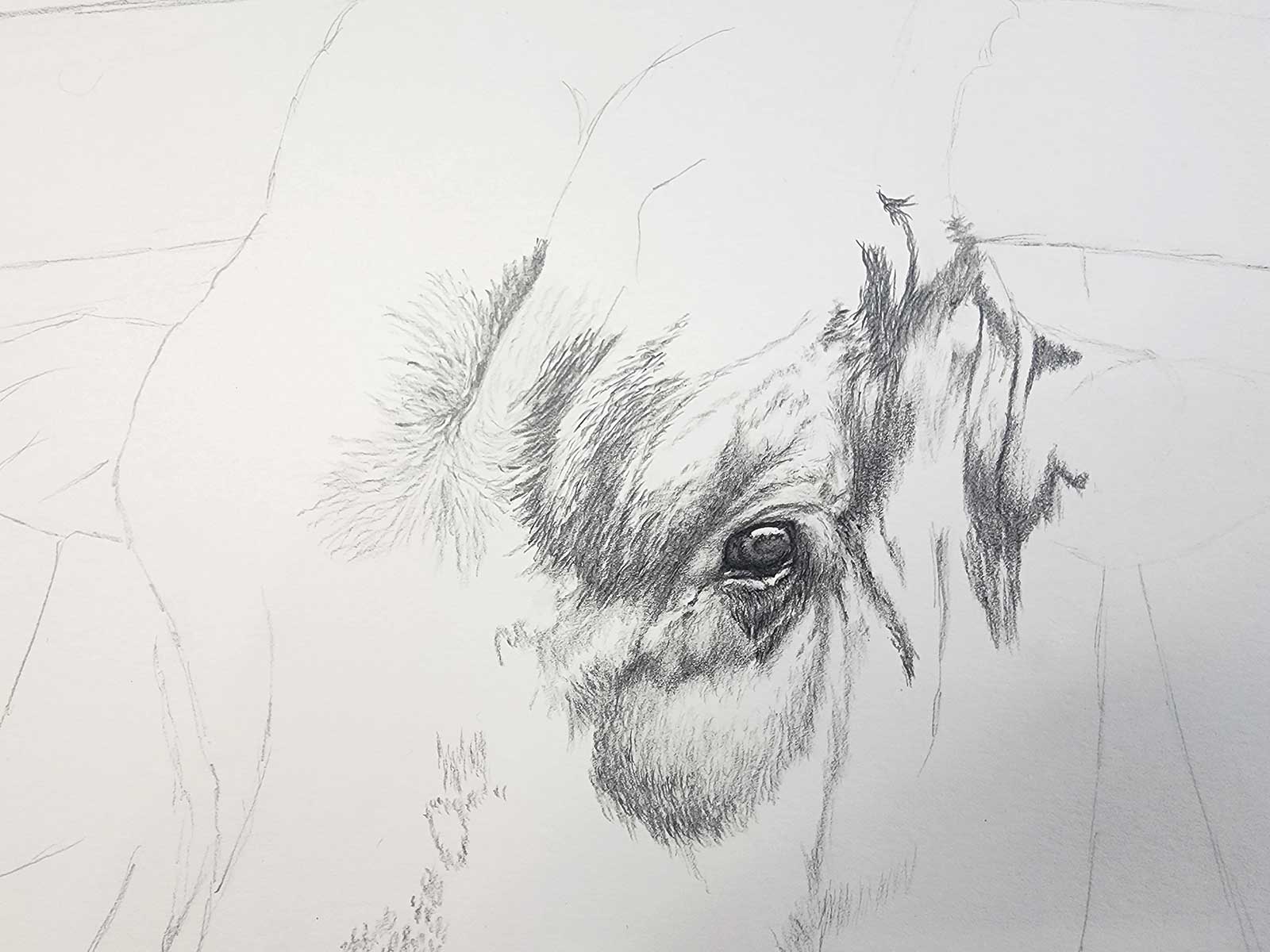
Stage 4 Starting in Earnest
Now that I’ve committed, I start working through the piece counterclockwise. Establishing hair patterns, skin folds or imperfections are roughly sketched in.
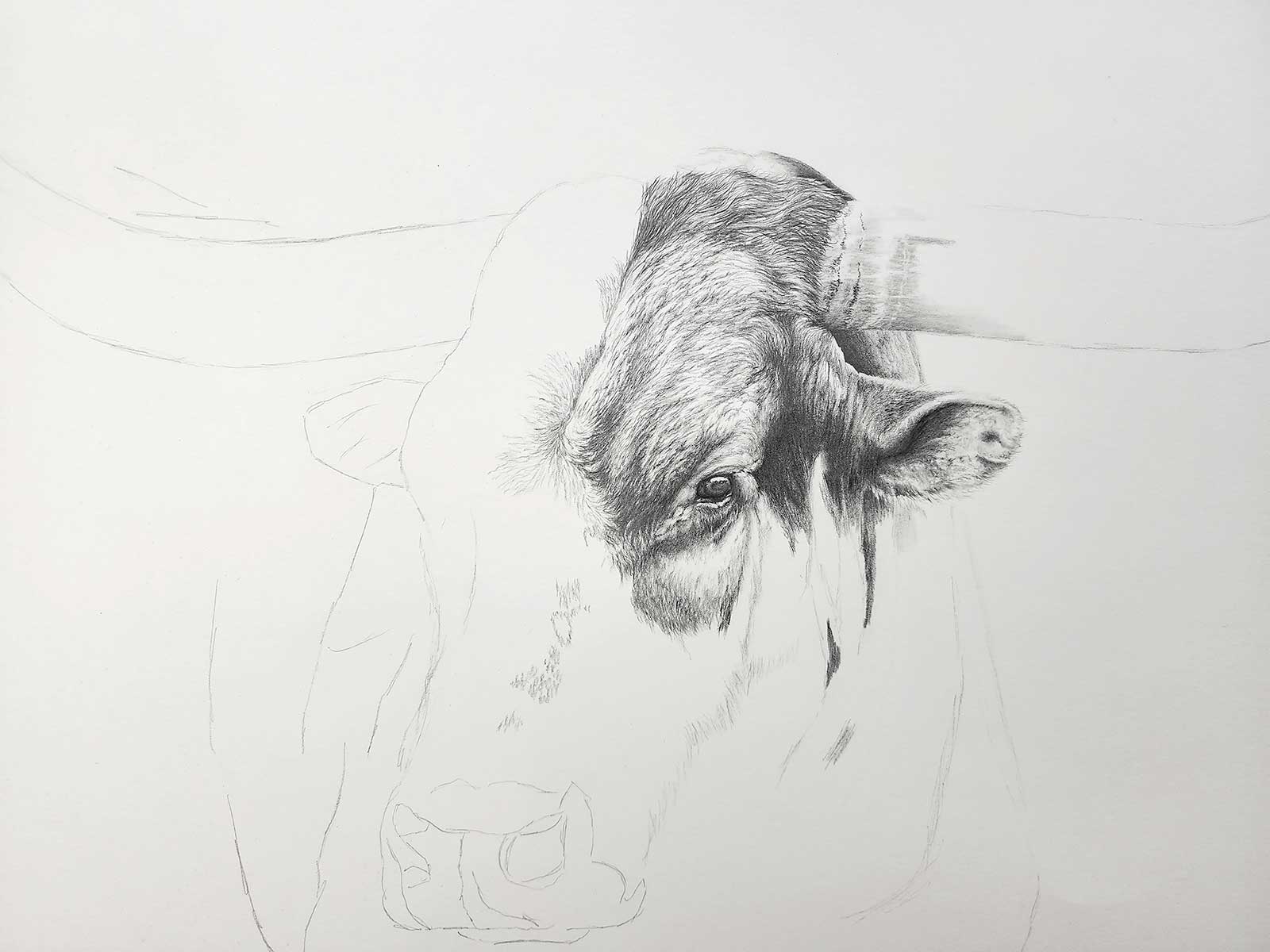
Stage 5 Overcoming Struggle
Although the piece is coming along, it has been a slow start. Technically, this is one of my first non-wildlife animals and I’m struggling to make a connection and commitment to the piece. This is where I employ many of my technical techniques to work through this artist block. From rotating the paper to moving on to various sections.
Layers
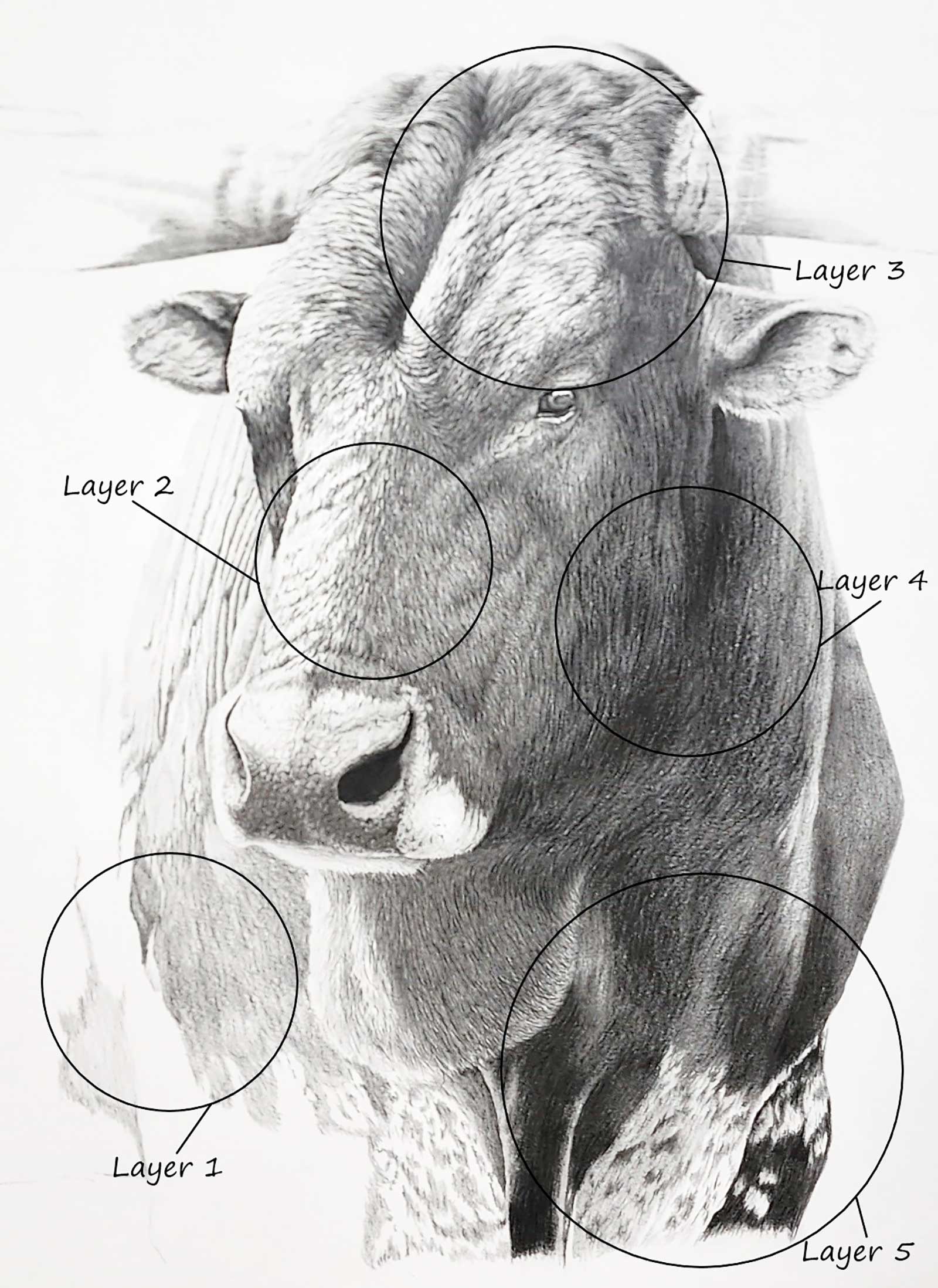
1. Outlines and light shadows (pencils: H, 2H)
2. Slightly darker areas, hair flow (pencil: B)
3. Shading (pencils: H, F, B)
4. Dark shadows (pencils: 6B, 8B)
5. Darkest shadows and depth areas (pencils: 9B, Polychromos black)
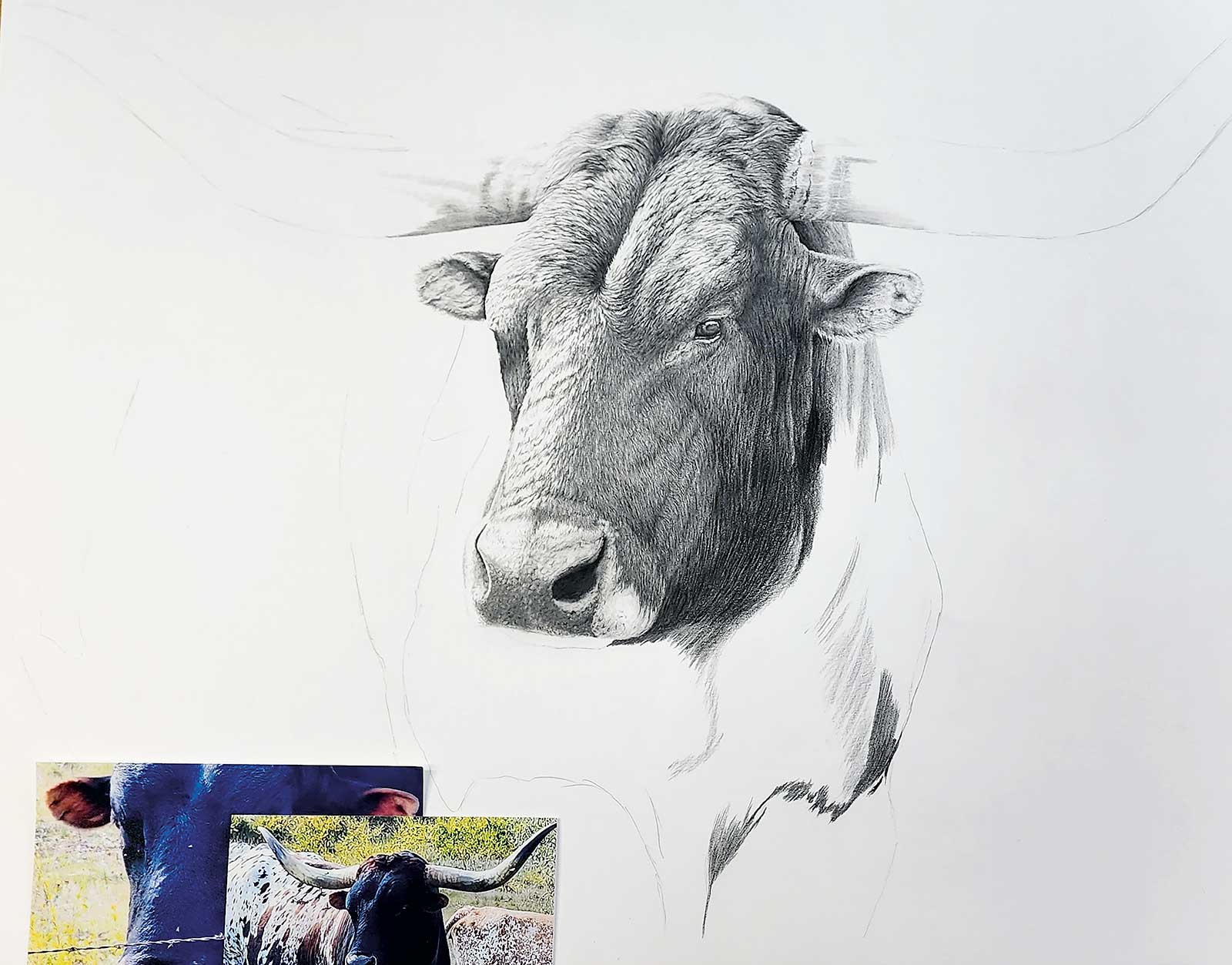
Stage 6 Coming Together
While it has been a struggle to get to this point, I am finally getting excited that my vision for this piece is coming together. Using the H, 2H, F and B, I have added layers one through four so far to parts of this section. A lot of time has been spent working with the erasers on the nose and ears to get detailing right. He is really gaining that personality I saw in the field.
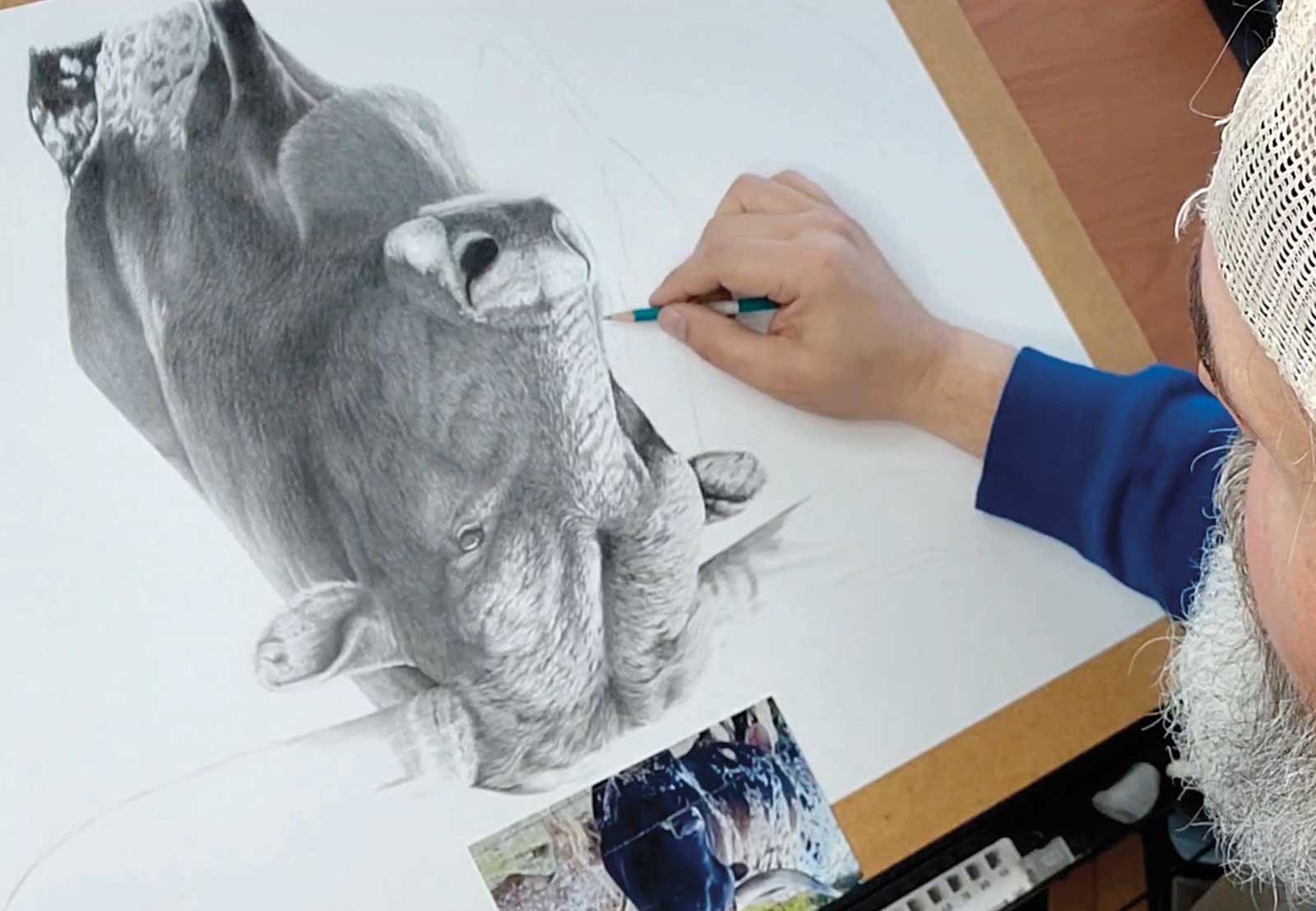
Stage 7 Details
Before I continue with the body, it’s important to get all the small details completed in this region so I am not fighting against the graphite and smudging the paper. Drawing upside down forces me to focus on the details in one spot and not the whole picture.
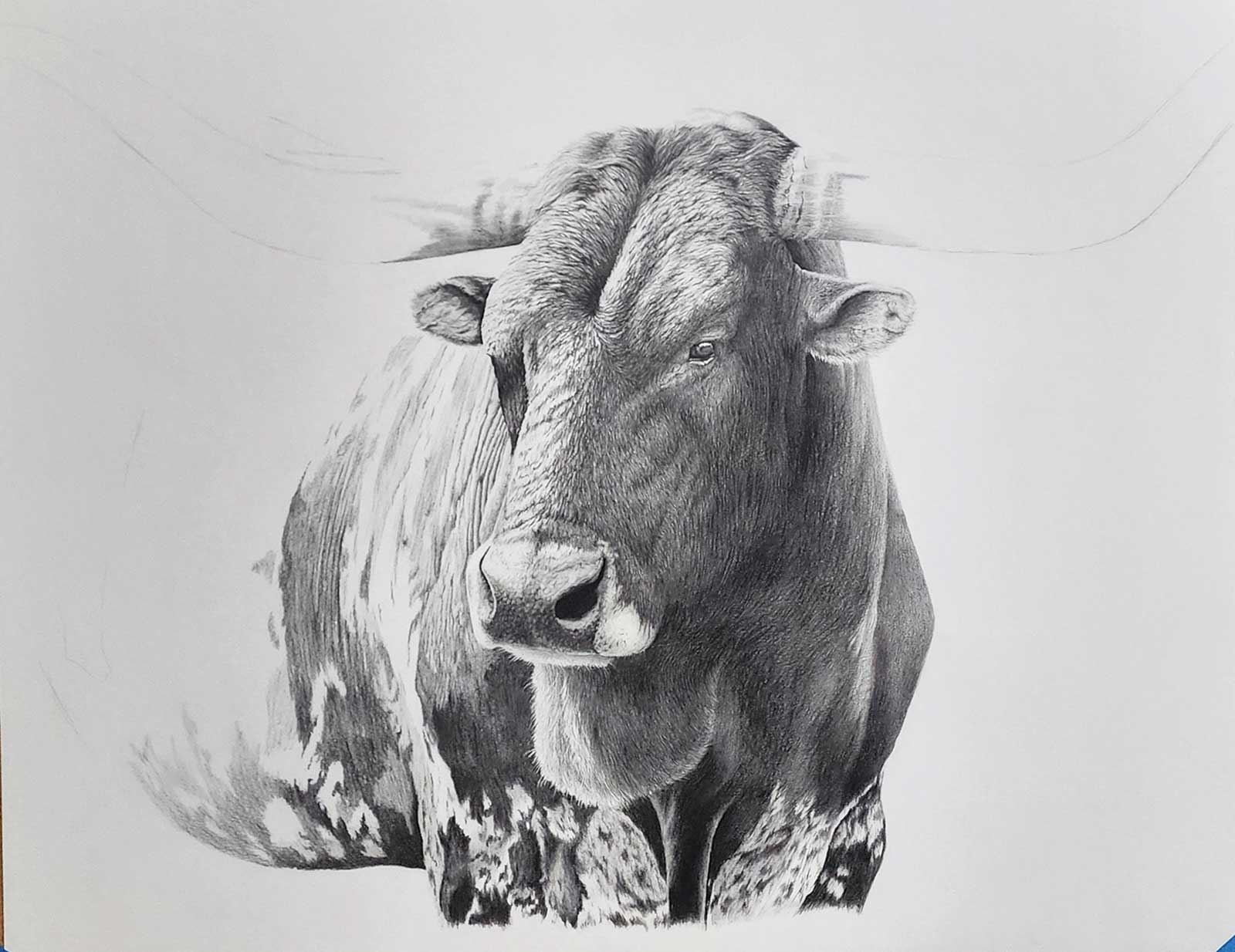
Stage 8 Unique Characteristics
The details of the skin folds are in place, chest spotting is complete, and layers one through four have been started down the body for the remaining pattern of this bull.
Stage 9 Staying the Course
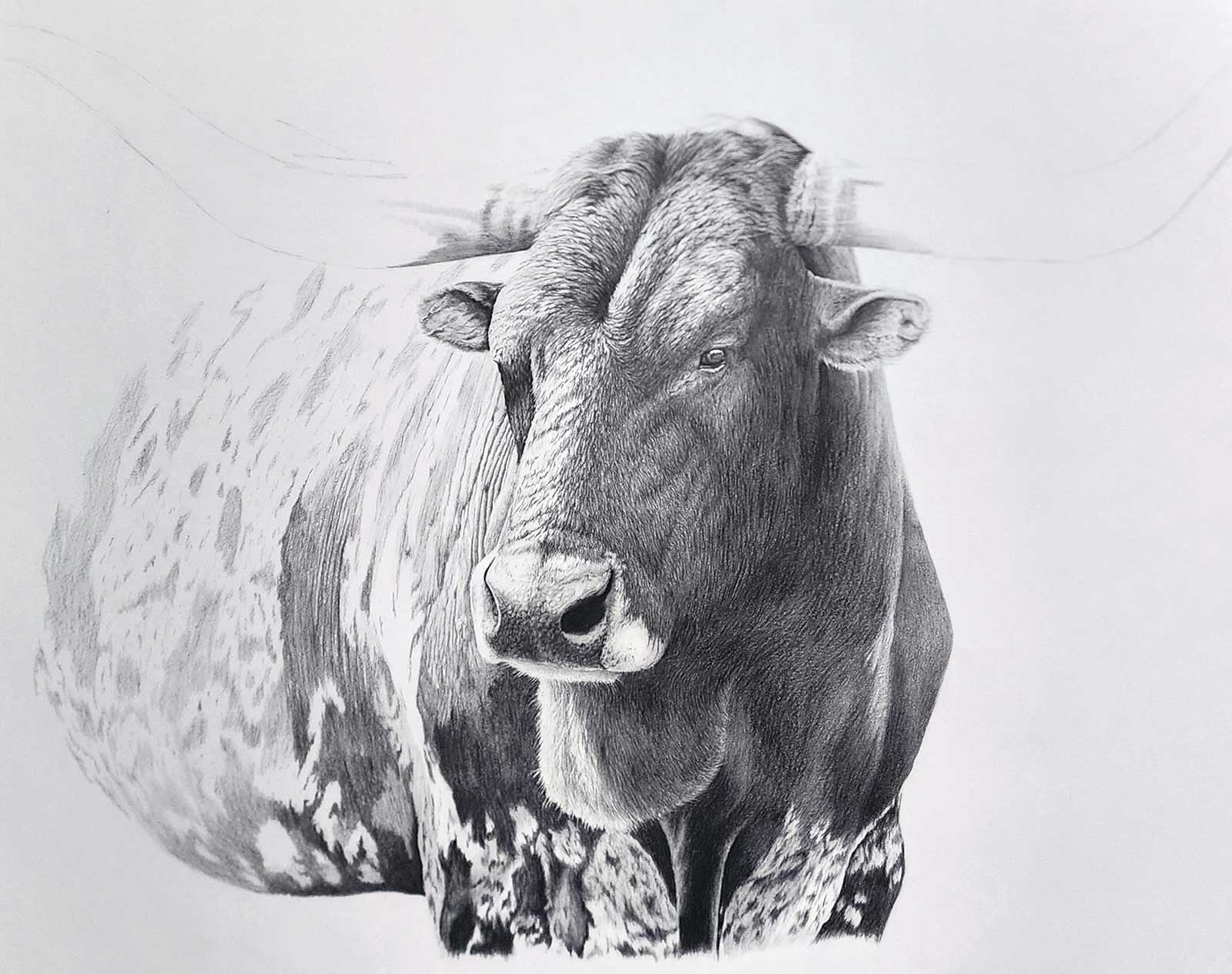
This animal has one of the most time-consuming hide patterns that I have ever done. Although it took quite a while to get the layer of shading through the body as shown here, he is quickly shaping up to be one of my favorites.
Upside Down
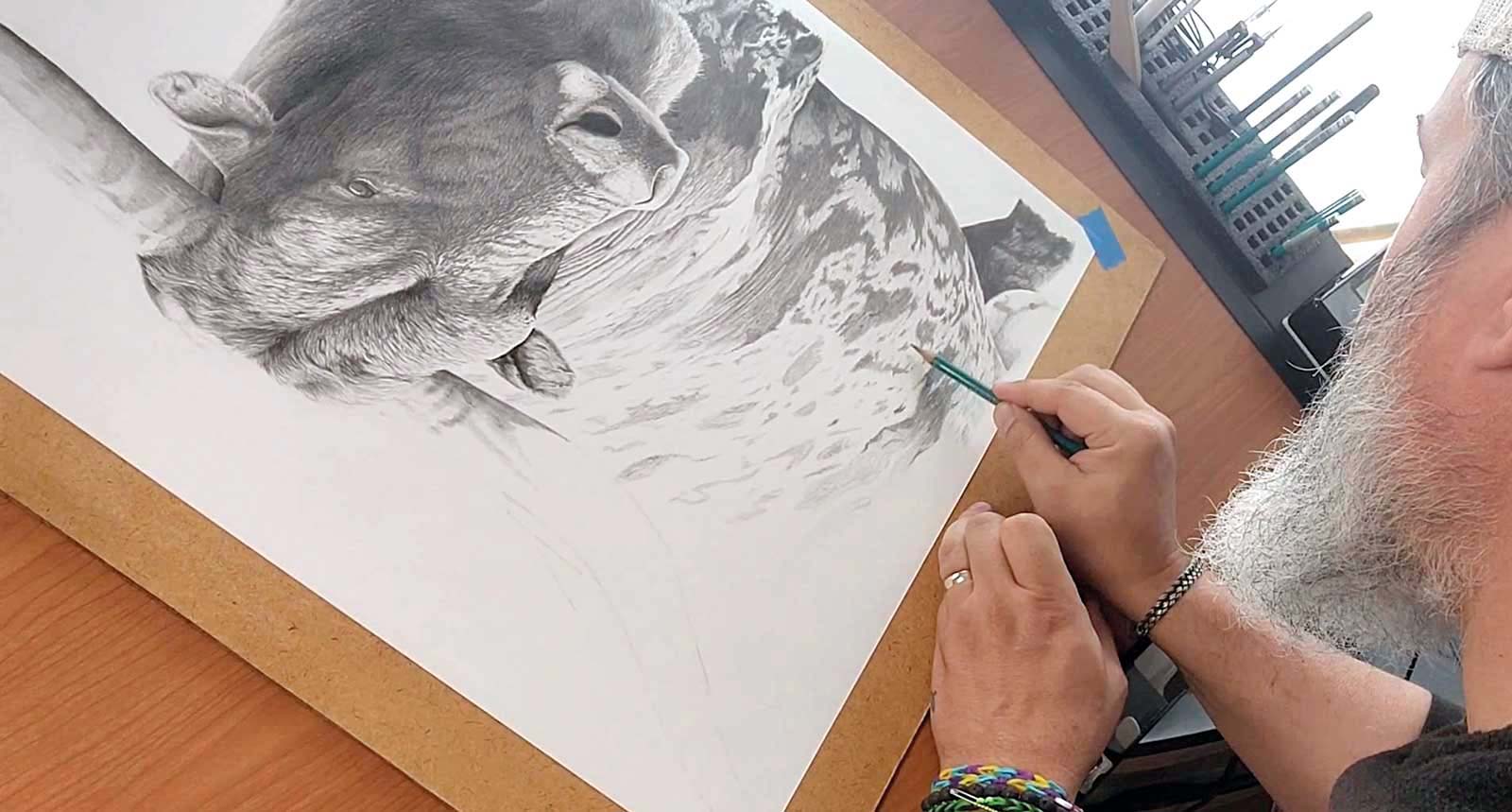
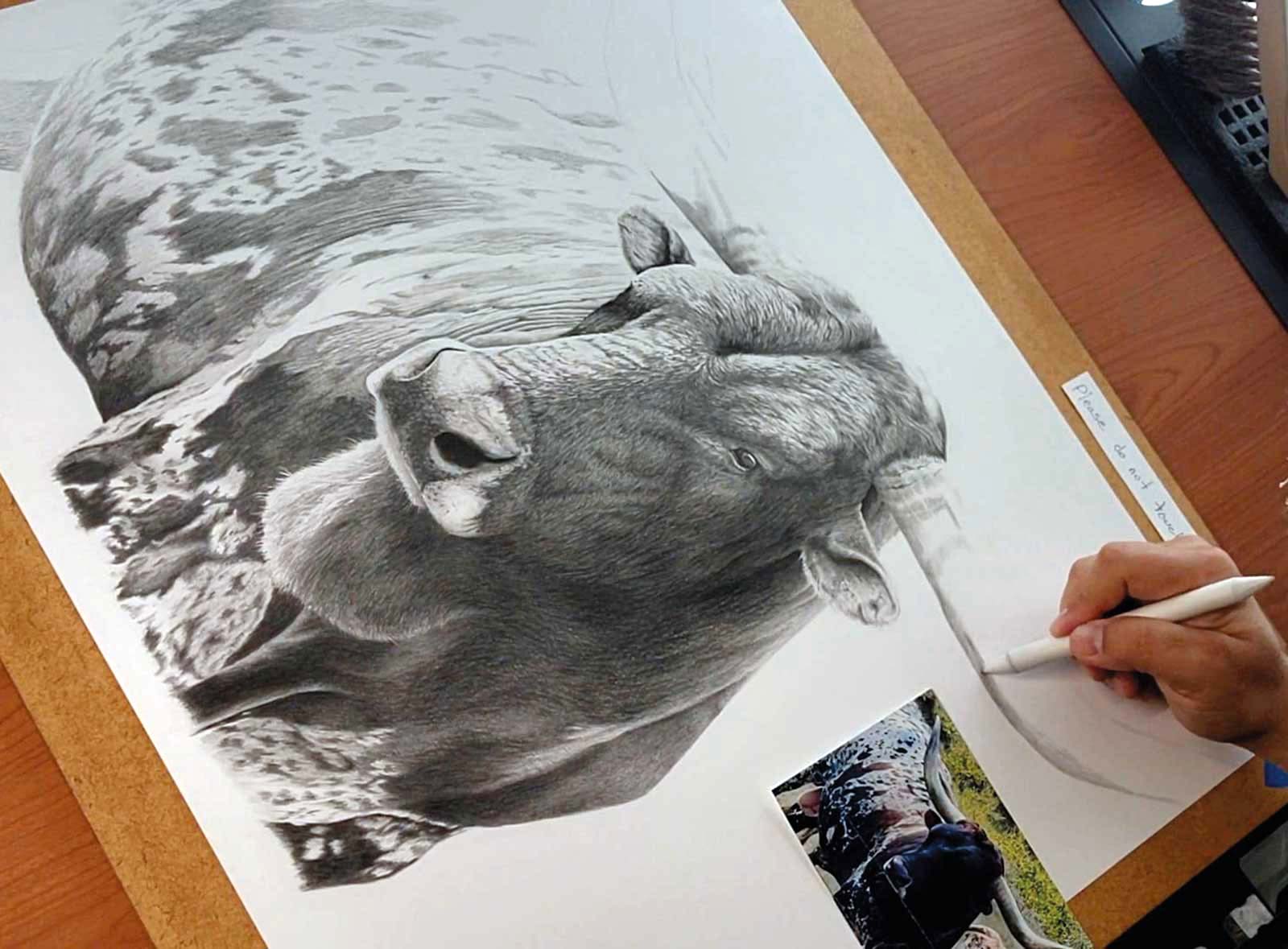
In order to fully concentrate on the specific details of my subject, you will often find me drawing upside down, sideways or at an angle. This forces me to slow down and focus specifically on those details, blocking out the rest of the composition for the moment.
Stage 10 Finding a New Focus
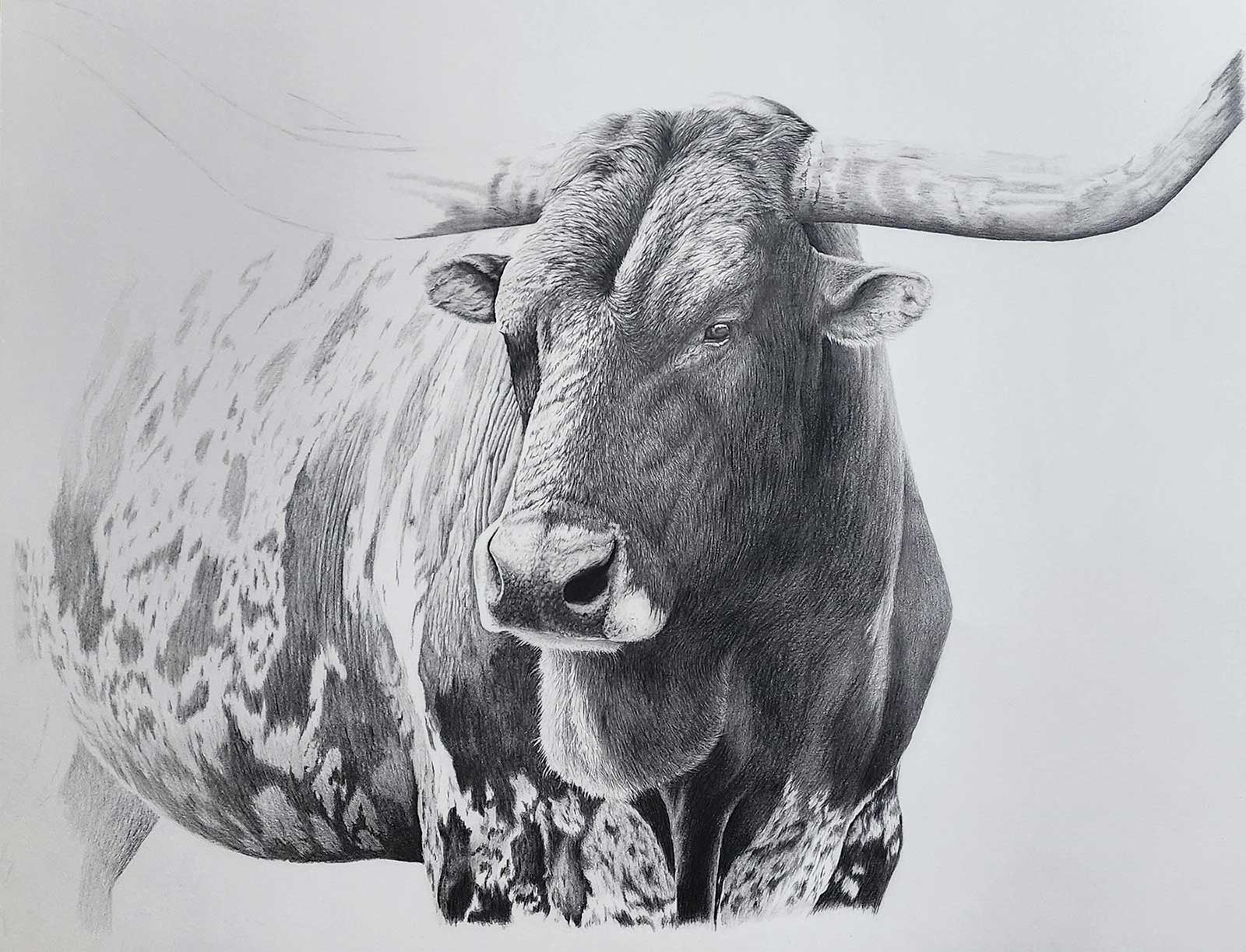
After getting through the third layer of shading down the body, I decided to take a break from that and focus on a new area. The horns, being a smooth, hard surface, required the graphite to be applied in multiple soft layering. This was done with 2H graphite and then smoothly blended with blending stumps.
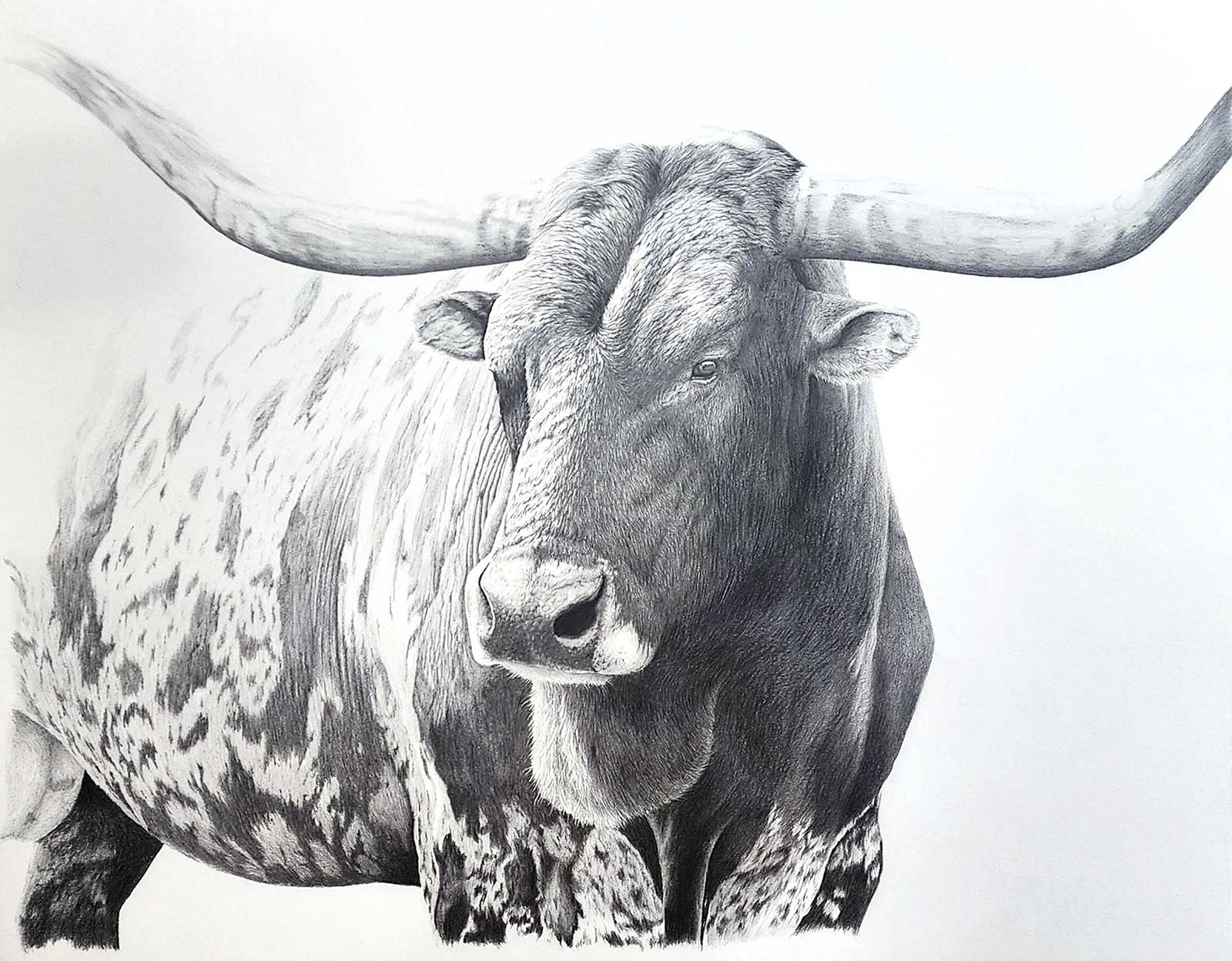
Stage 11 The Best Part
I have made it to the part that I find to be the most rewarding as an artist. Darkening shadows, moving shadows and creating depth. This is where the subject comes to life right before my eyes. It’s time to bring out the level five layer, but tread carefully. Too heavy a hand with the Polychromos or 9B can draw viewers’ attention away from the intended focal point.
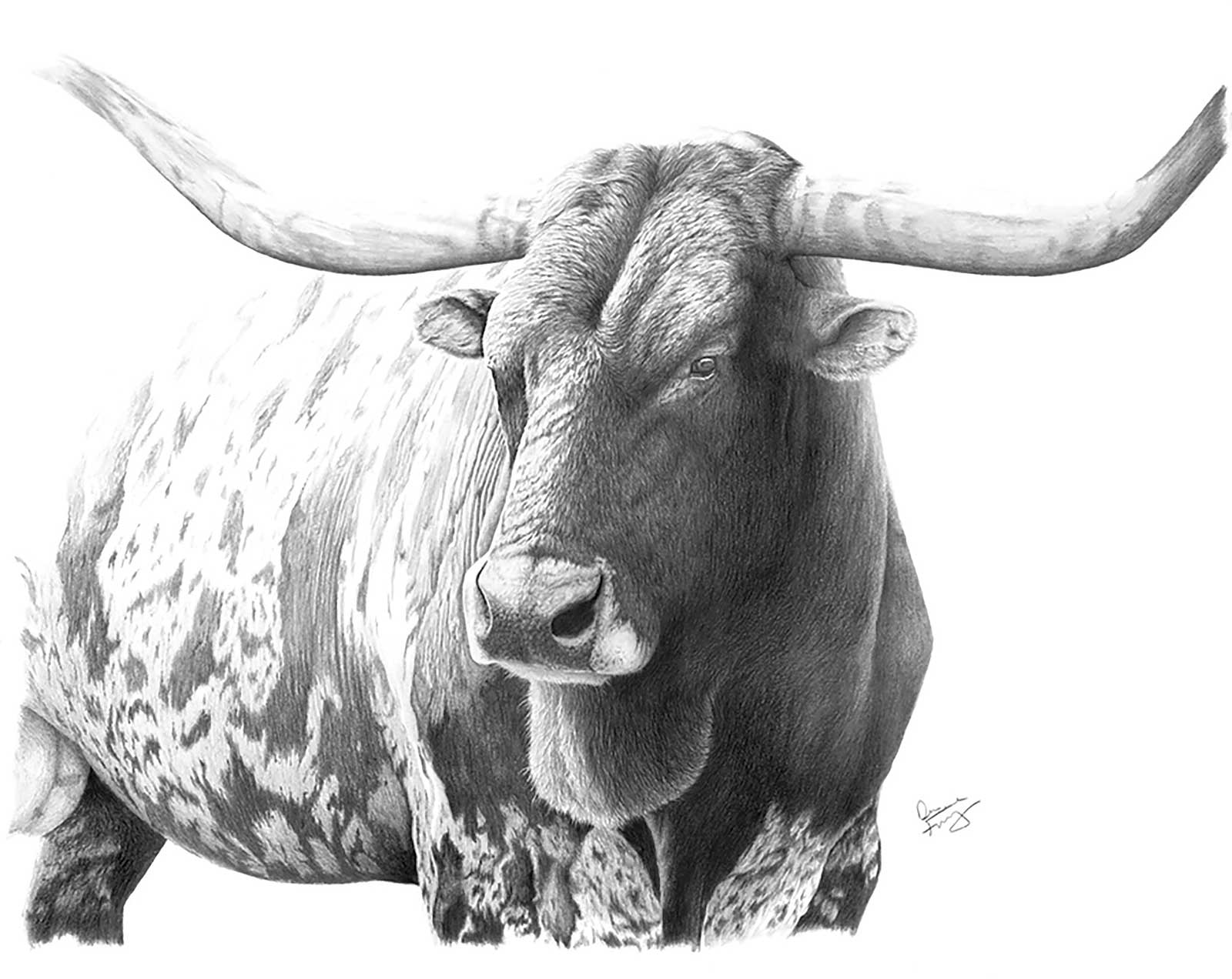
Stage 12 Finished Artwork
Headstrong, graphite, 18½ x 23½" (46 x 11 cm)
This piece was one of the most challenging that I have had the pleasure of completing. While I was excited to start a piece different from what I usually do, I struggled to connect with it in the beginning. I constantly checked myself to make sure I was accurately portraying the personality of the animal.
About the artist
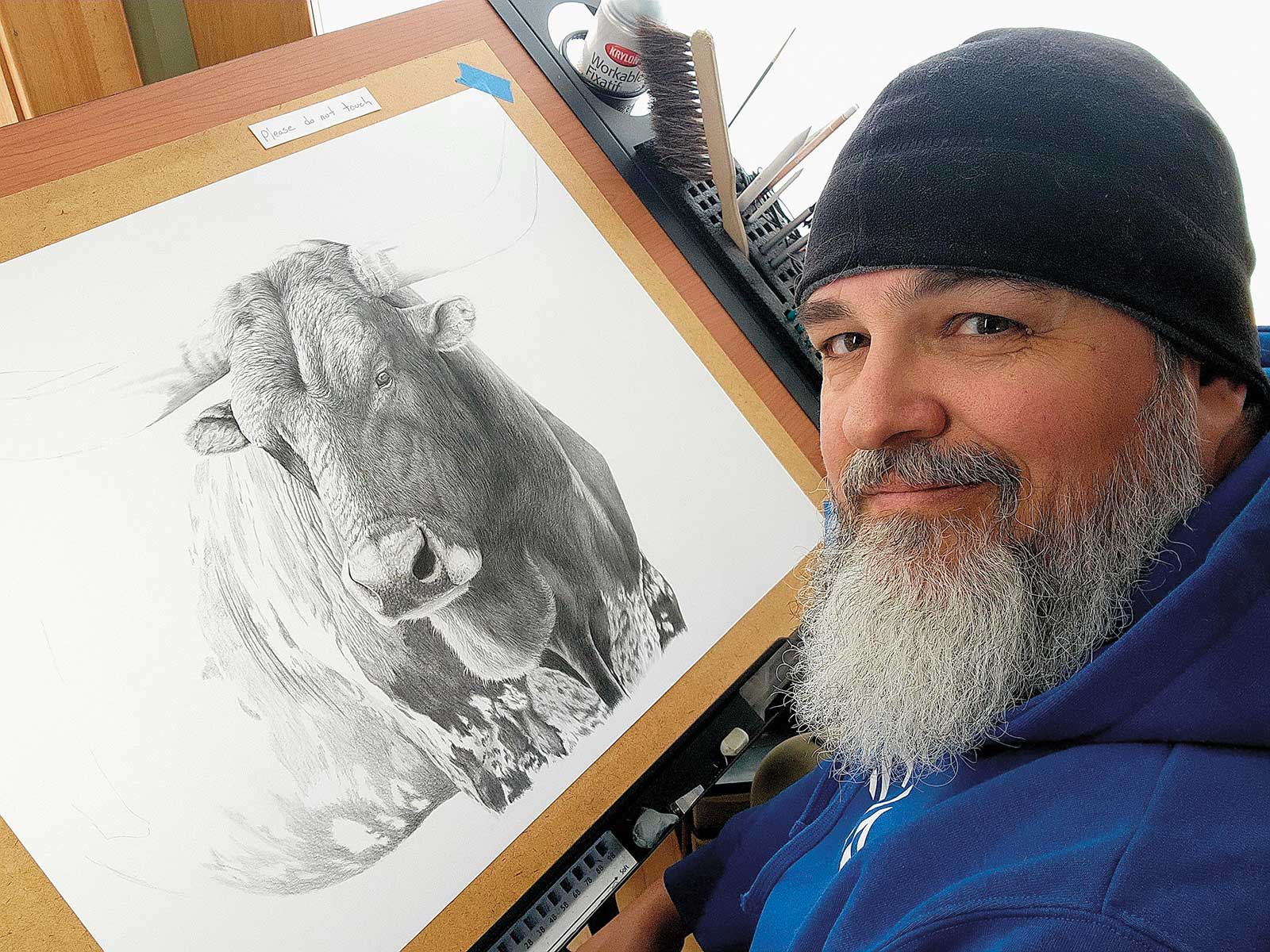 Duane Frey
 Duane Frey is a self-taught artist based in North Dakota. Working in graphite, Frey brings out powerful contrasts in his artwork—light and shadow, softness and strength, stillness and motion. Each new piece he creates is more than just a drawing, it is a testament to hours spent outdoors, observing and studying, and a tribute to the animals that continue to inspire his artistic journey. His work focuses on the perfect imperfections of nature, and graphite lets him reveal those imperfections in raw, intricate detail. Frey’s work can be found in the homes of many clients and collectors around the world.
Contact at
contact@duanefrey.com
duanefrey.com