This painting is the second work in a planned series for a book of fables. Each painting will be accompanied with narrative poetry or prose I am writing as part of the collection. The project was born out of my deep affection for fables, myths and folklore—old stories from Romulus, Aesop, La Fountaine, Anderson and other fabulists. I lived much of my childhood ferally, in the isolated wilds of West Virginia. Life during those early years was divided between helping my mother grow and harvest our own food, lone adventures in the woods, reading countless picture books and art making—the bulk of which was by illustrating my own stories.
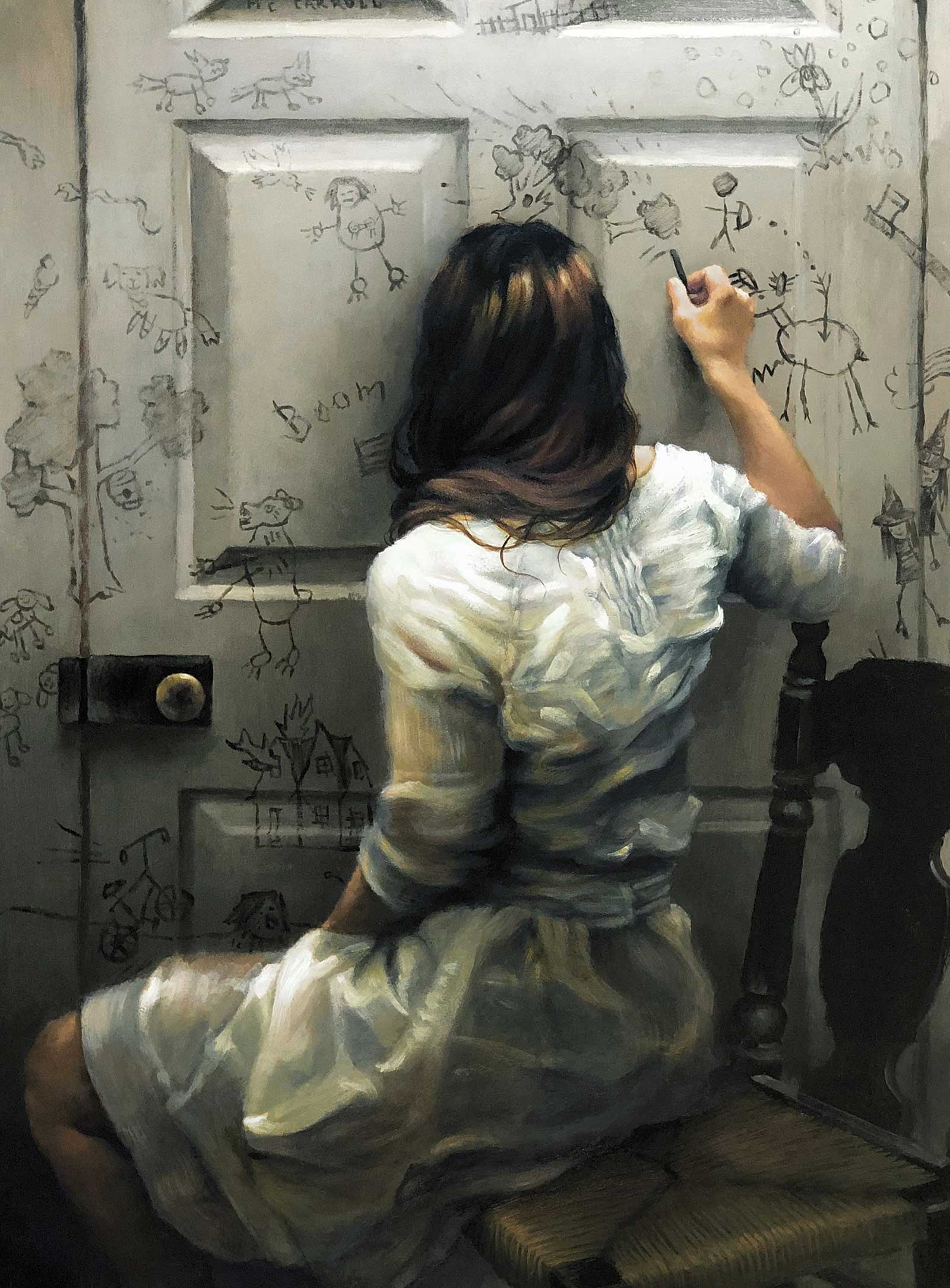
Self Portrait with Memory, acrylic on panel, 24 x 18" (60 x 45 cm)
These new paintings and stories are born out of those early experiences and my love for the natural world, its fecundity and all the animal characters within it. The image of a fox frolicking with an electric pink bra first surfaced in my mind during a meditation, and I wanted to nurture it into being for its whimsical quality. I made a casual sketch in my little lined notebook after the meditation and got to work.
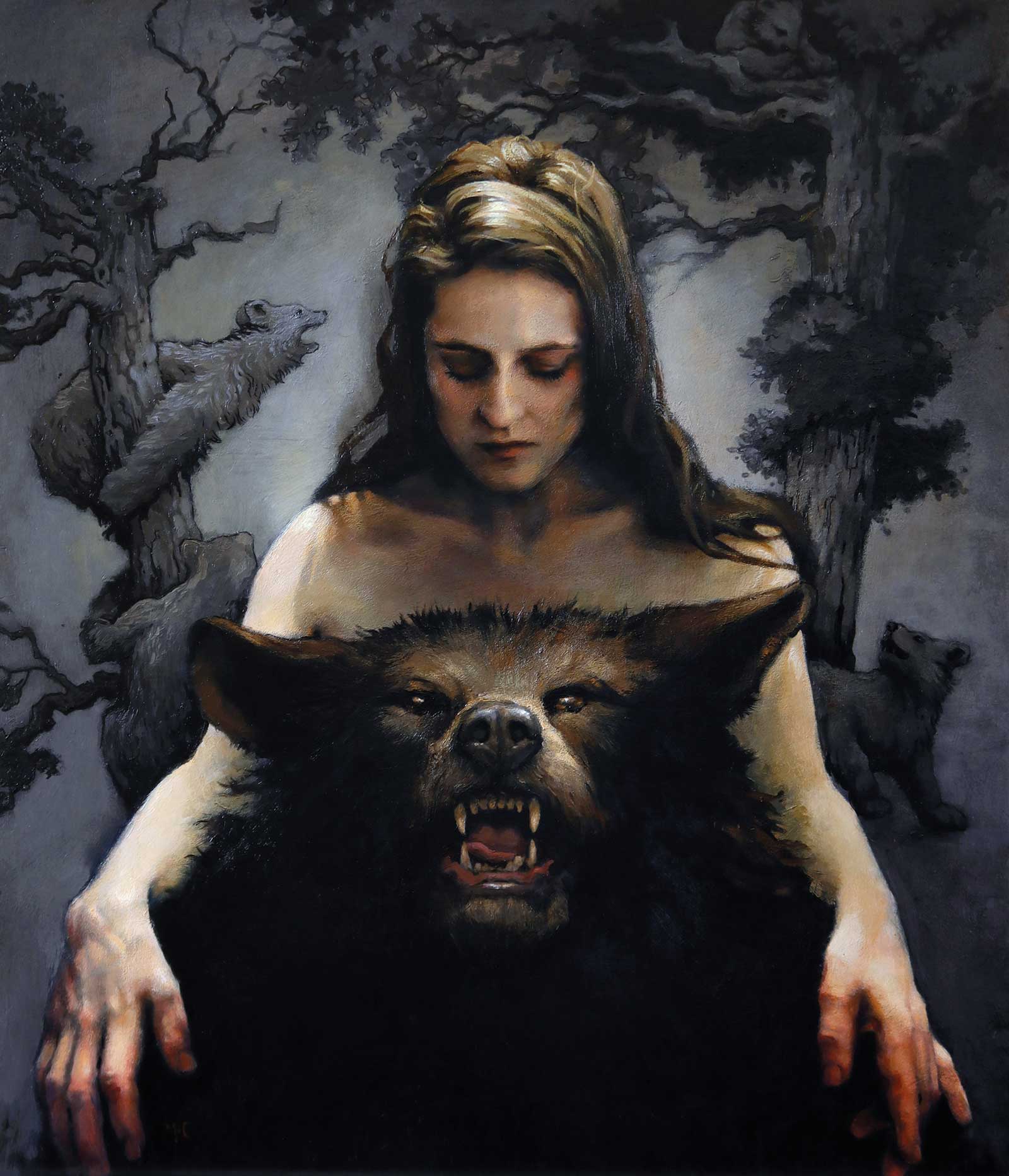
The Bear that Swallows Me, acrylic on panel, 20 x 20" (50 x 50 cm)

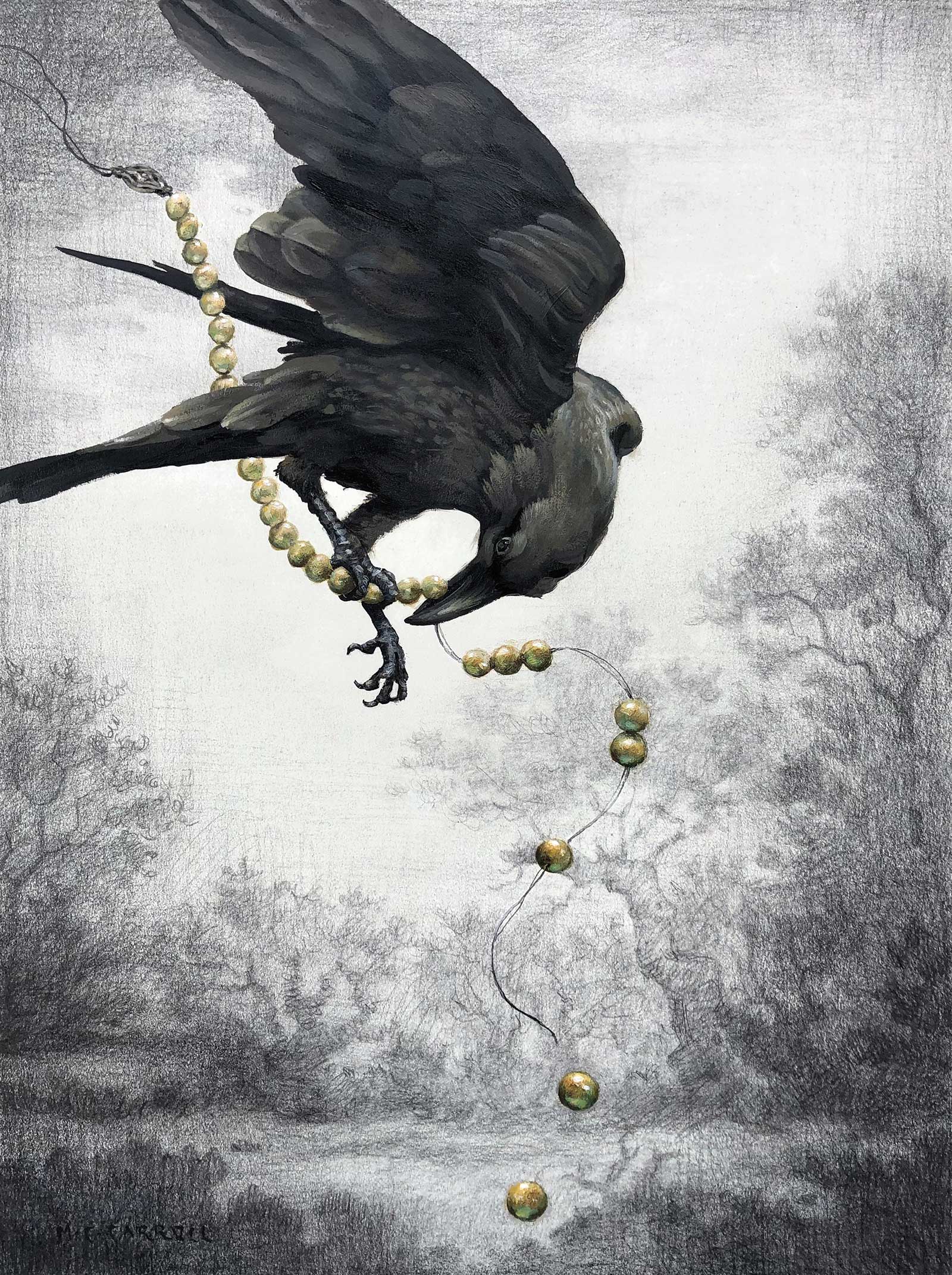
The Talisman, acrylic and graphite on Stonehenge paper, 16 x 12" (40 x 30 cm)
The later finished sketch was informed by careful study of foxes and landscapes in classical art, which I always reference. I drew significant insight from Bernard te Gempt’s After the Meal and Gustave Courbet’s Fox in the Snow. Over much of my career, I have found that the most effective way to build technical skill is to practice making master copies. Aiming to replicate them as closely as possible is a challenging process and a tall order, but we can collect a vital intellectual capacity in this way. It can feel as though you are inhabiting the painter’s own brain when copying something stroke for stroke, matching hue, value, tone and texture. Though it feels entirely uncomfortable in there because you are working outside of your own understanding, this is the very space where we can learn most.
My Art in the Making The Fox and the Madness of Love
Ordinarily, the stories for these fables come to me first before I start the painting, but in this case, I have not yet fleshed out the narrative. That aside, it is about a fox that falls in love with a woman, to which the woman is oblivious.
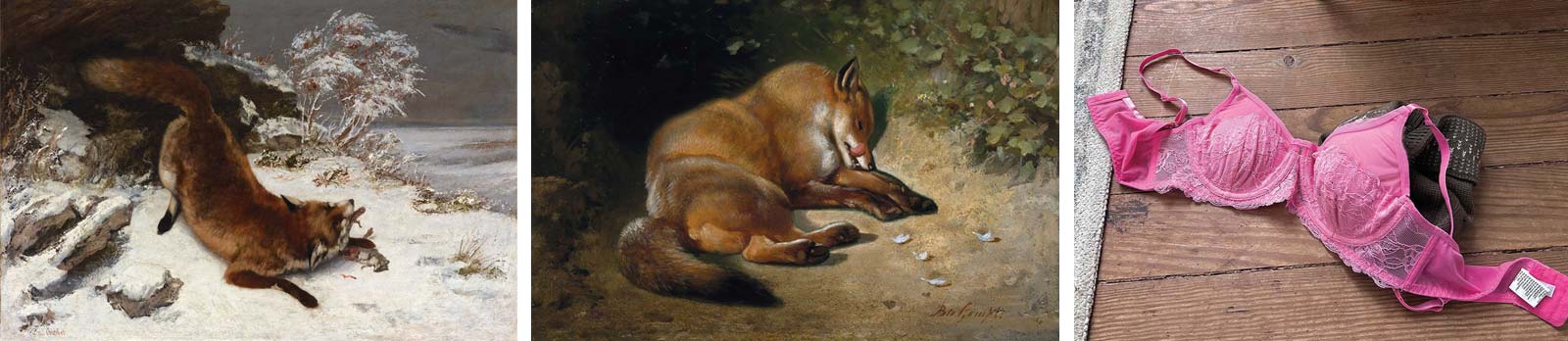
Left: Fox in the Snow, 1860, by Gustave Courbet (1819-1877). Middle: After the Meal, by Bernard Te Gempt (1826-1879).
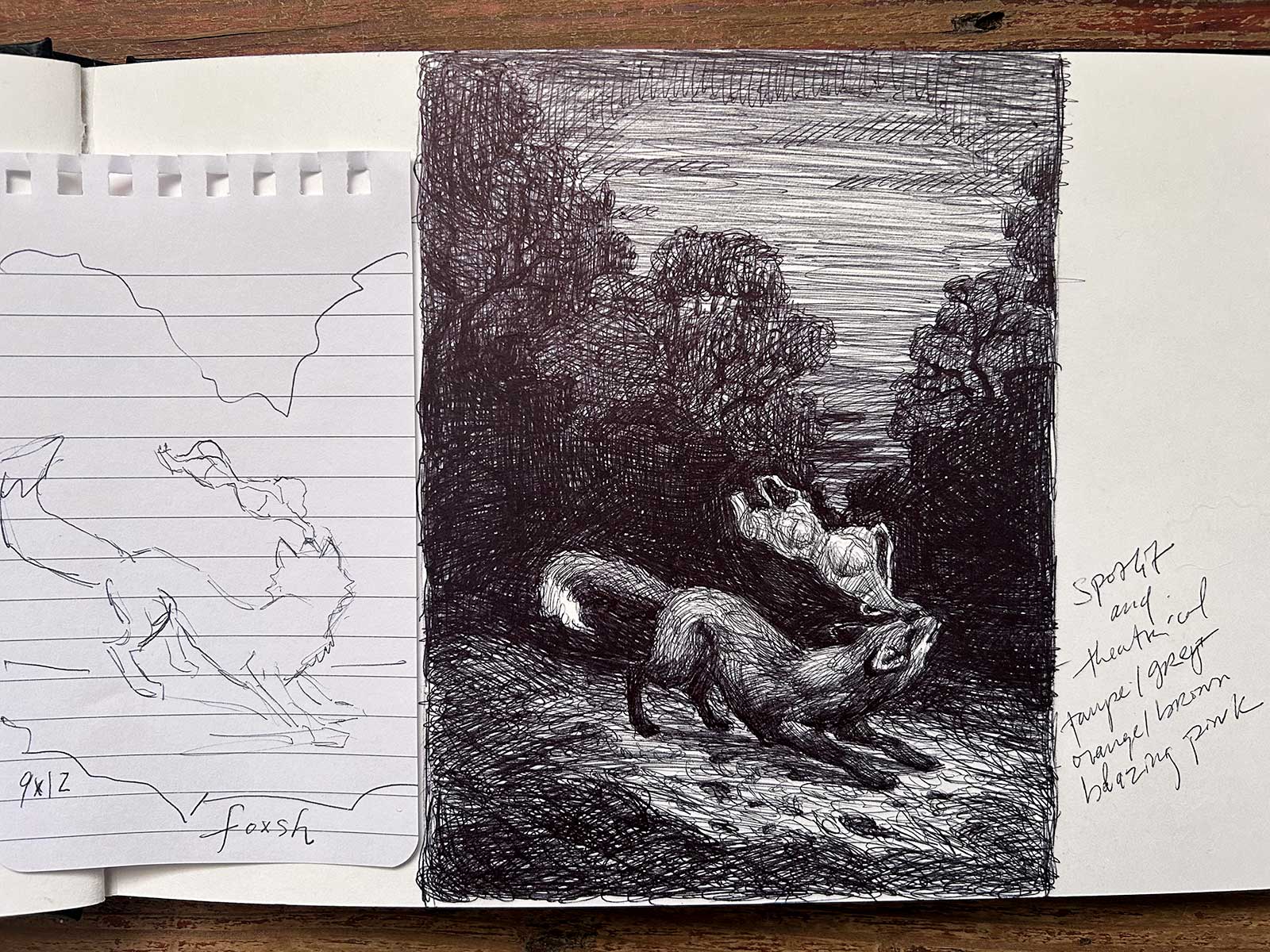
Stage 1 Journal Sketch
My 6 x 9" Stillman & Birn sketchbooks hold all my ideas and final ballpoint pen sketches. My preference is the smoother Zeta series paper, though other varieties, including watercolor paper, are also available. I will make notes in the margins on how I want it to appear as a painting.
WHAT THE ARTIST USED
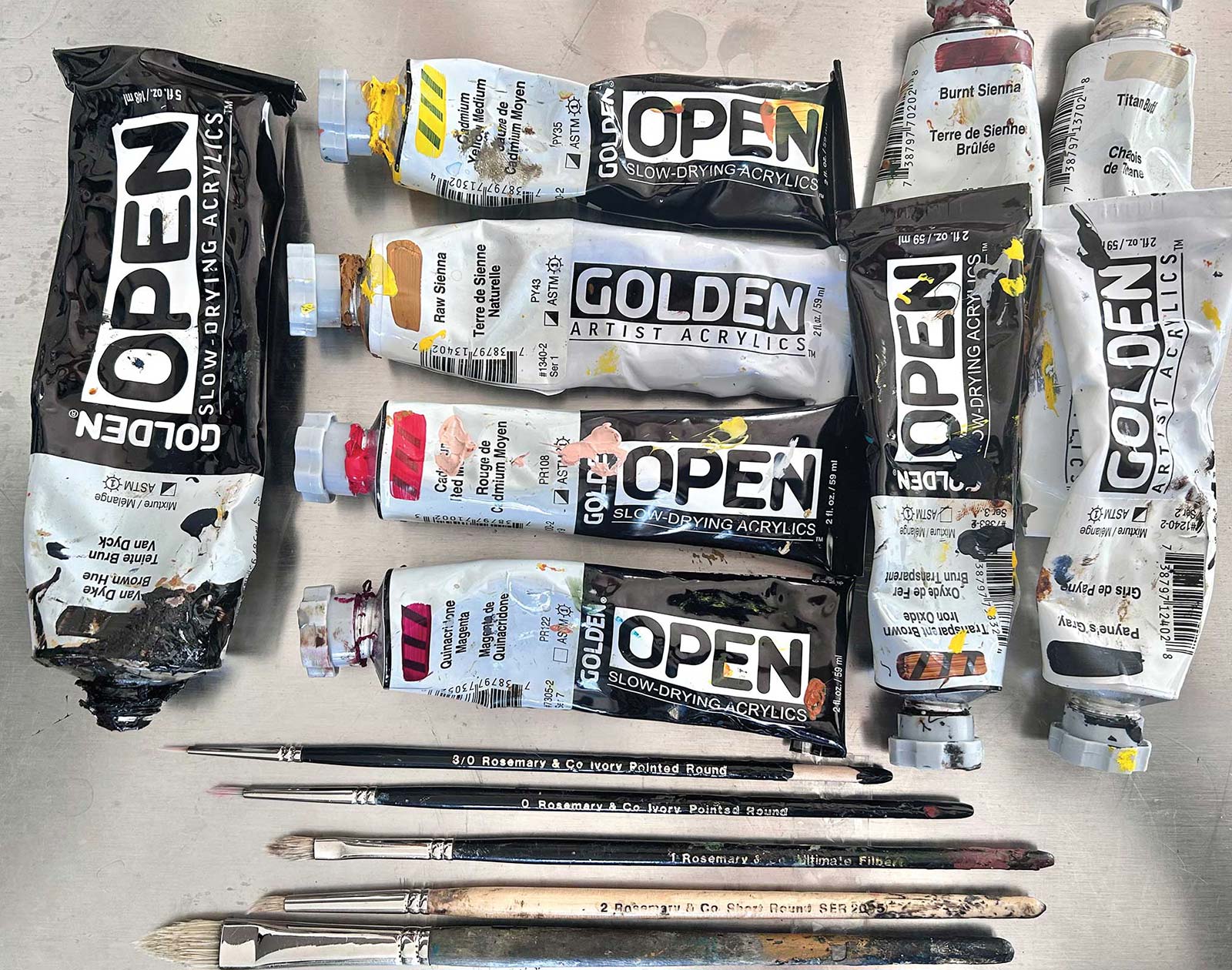
Golden Heavy Body Acrylics
Titanium buff, Payne’s gray, Raw sienna
Golden Open Acrylics
Van Dyke brown, Cadmium yellow medium, Cadmium red medium, Quinacridone magenta, Transparent oxide brown, Burnt sienna
Rosemary & Co. Brushes
Filbert chunking hog bristle, size 7, Ivory pointed rounds, sizes 3/0 and 0, Mundy mop, ½", Ultimate filbert, size 1, Classic round hog bristle, size 2
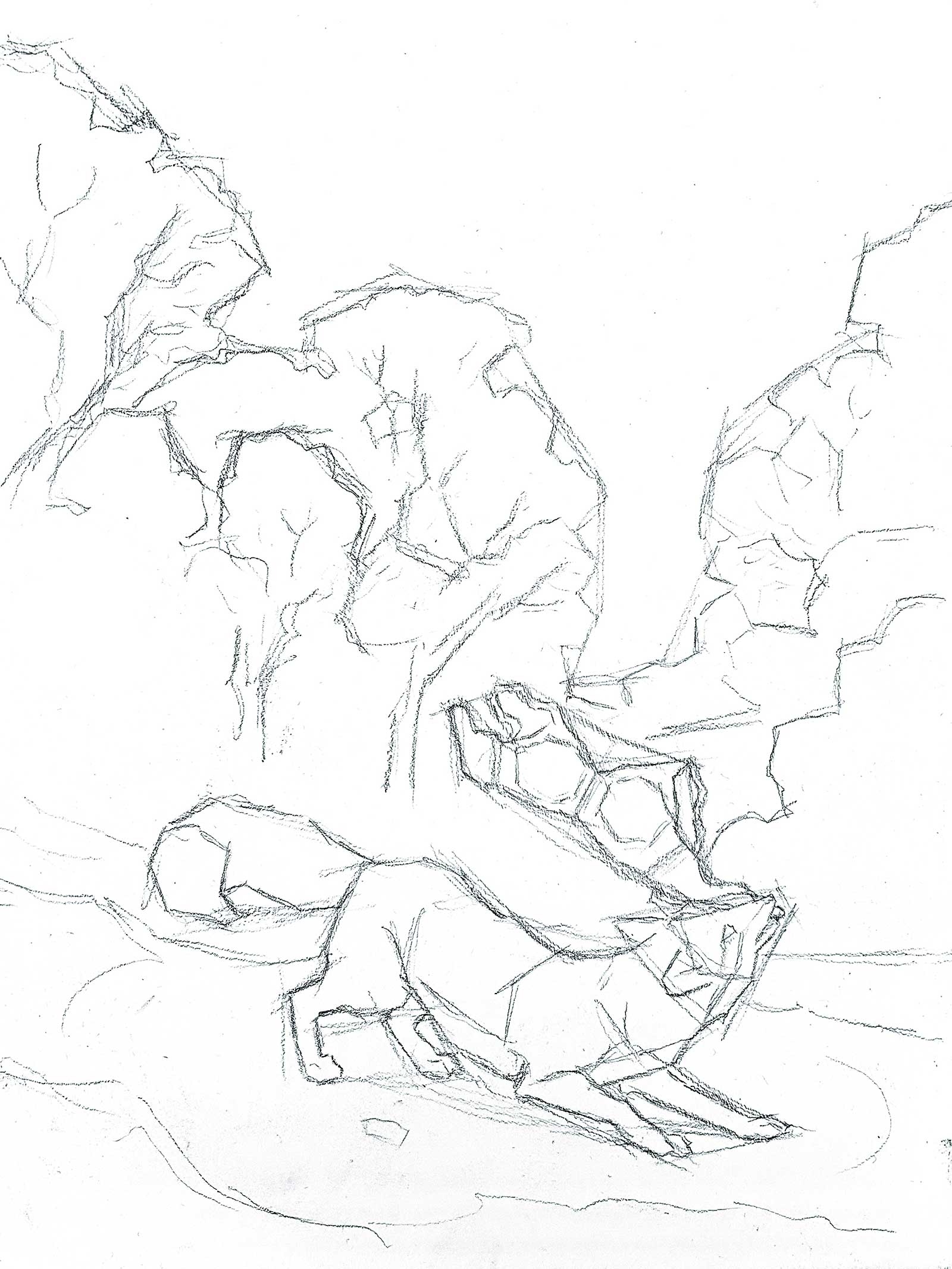
Stage 2 Block In
I transfer the sketch onto an Artefex Tempanel, which has an ACM backing that comes gessoed white for use in all media. I love their panels because they’re indestructible, and you can use wet media or oils without fear of warping, which could occur in time with wood panels. I copy the sketch in graphite, broadly defining parameters of the overall geometric shapes found in the subjects, being sure I have them correctly proportioned before establishing details.
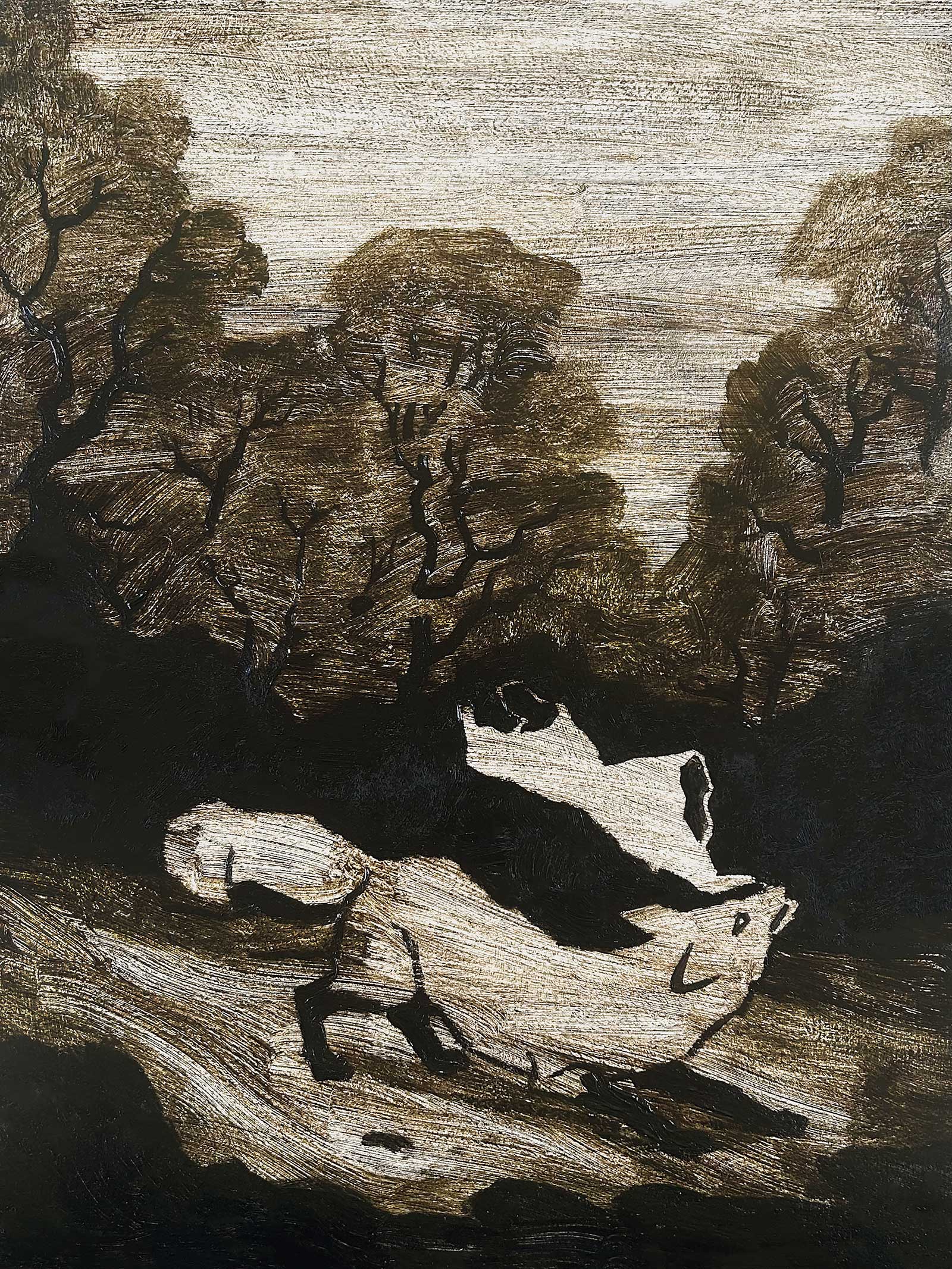
Stage 3 Underpainting
I use Golden acrylics and prefer the heavy body paints best, but also use their Open series for a more practical reason: I find that most paints in the red and orange portion of the rainbow, no matter the brand or medium, dry up quickly in the tube. The Open series of Golden Acrylics was created with a slow-drying medium so that they can be blended more readily like oils can, but I like the quick-drying textures that the heavy body paints provide. In this step, I am using a worn Rosemary & Co. size 7 filbert chunking hog bristle brush to establish the basic underpainting of lights and darks in Van Dyke brown.
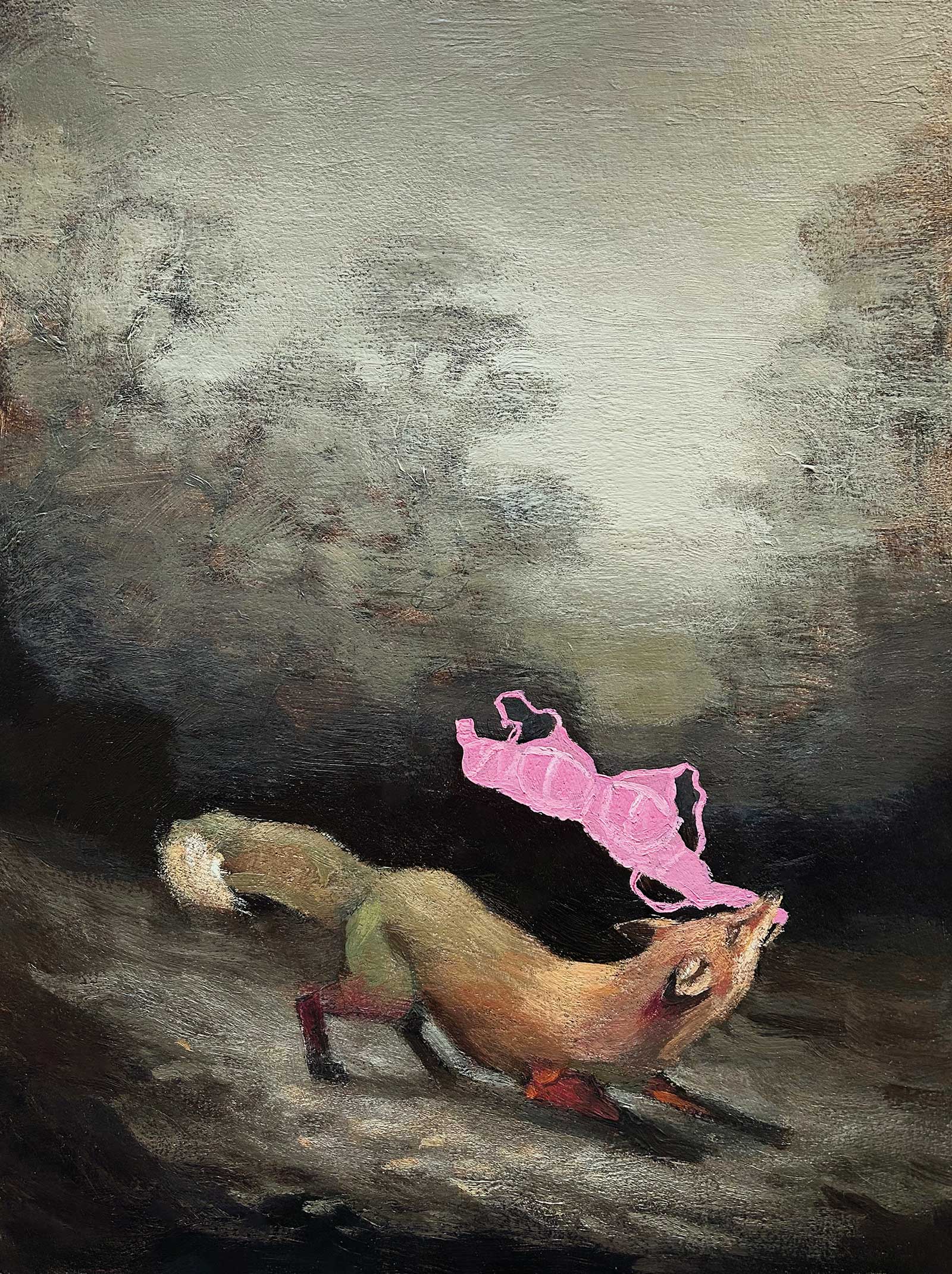
Stage 4 First Pass
Using a palette knife, I mix up a gray string of the dark to light values for the landscape, as well as the local colors in my fox and bra. The local color is the median hue that is present, the middle ground of the color overall in a single subject. Identifying the local color in my fox (including the oranges in its front body, the deep hues in its paws, and its more green-orange rear end and tail), I mix a short string of these colors, too. I lay down those local areas of color using the same brush as my underpainting.
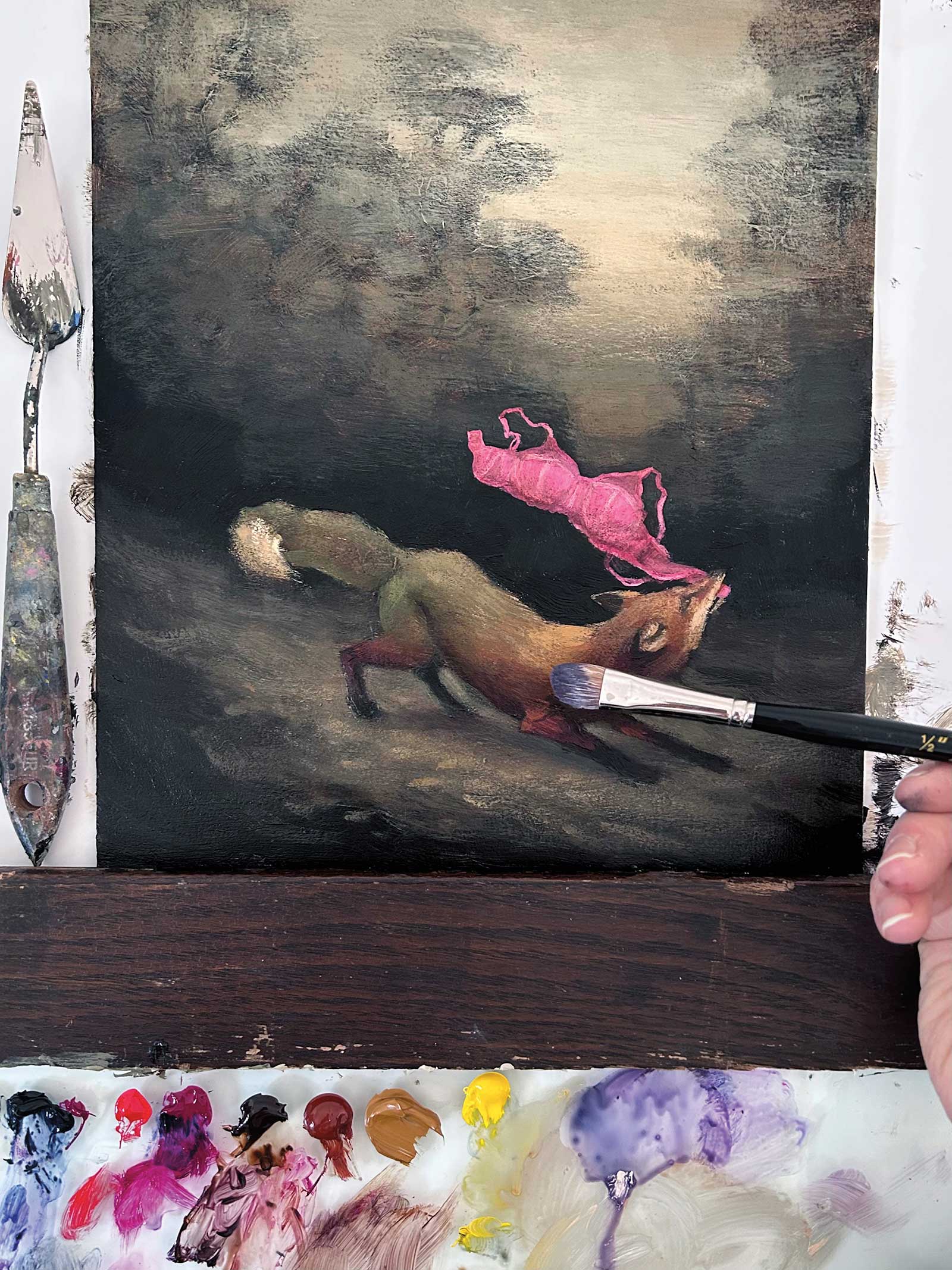
Stage 5 Glazing
Next, I layer glazes using a ½" Rosemary & Co. Mundy mop brush, which is incredibly versatile for glazes and washes. By mixing the Payne’s gray and quinacridone magenta (both transparent paints) into a wash diluted with water, I create the indigo hue in the mop brush that will add depth in the darkest areas of the fox over the first layer. For the warmer areas of the fox, I mix a wash of transparent brown oxide, Payne’s gray and cadmium yellow medium, thinned by water. The bra has washes of quinacridone magenta and transparent brown oxide.
Color Swatches
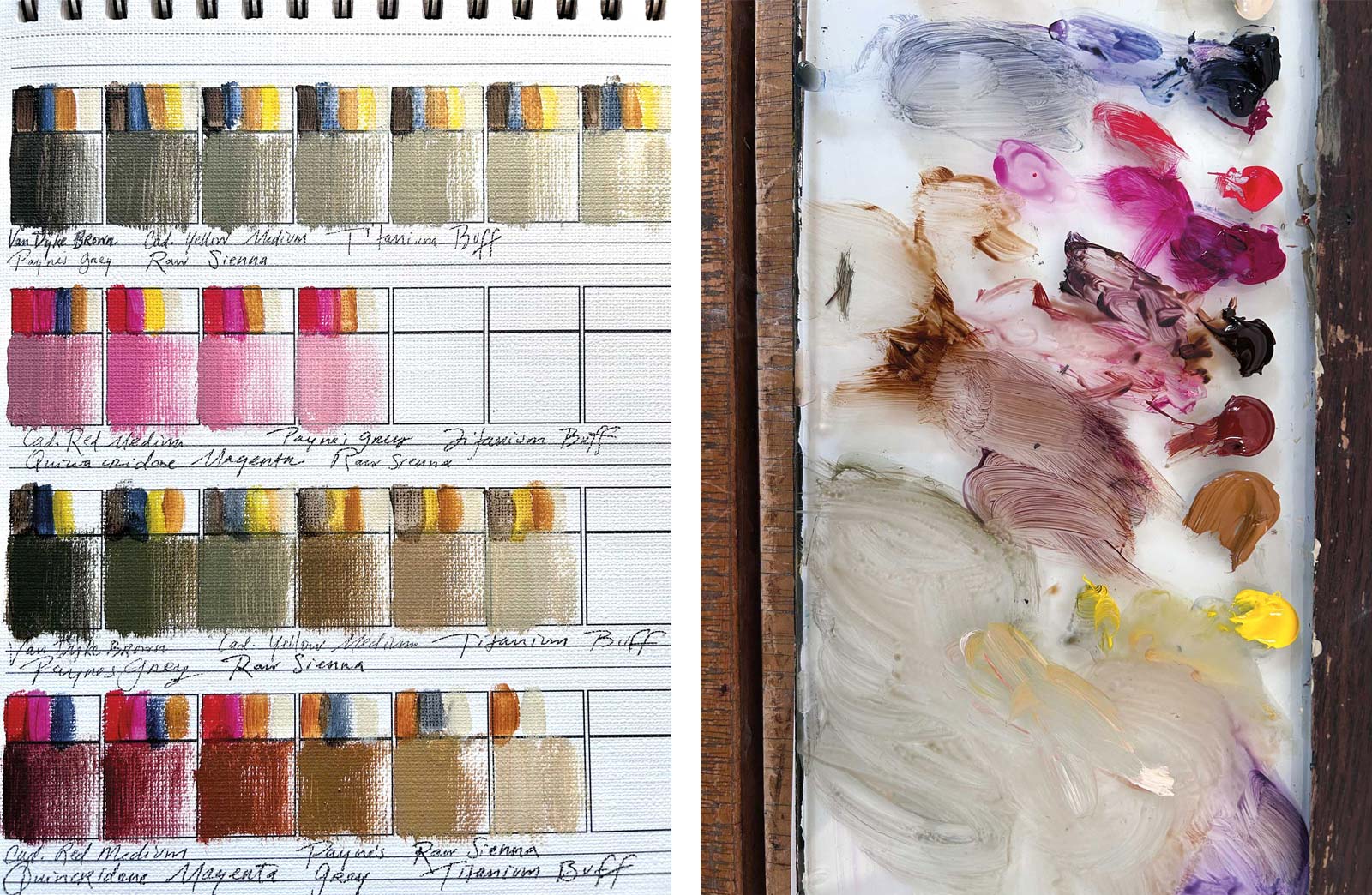
I have included swatches of my color mixes for the purposes of this demo in a Painter’s Color Diary, a gift from Jerry’s Artarama. Also photographed is a palette of my basic mixes and a second palette of glazing paints.
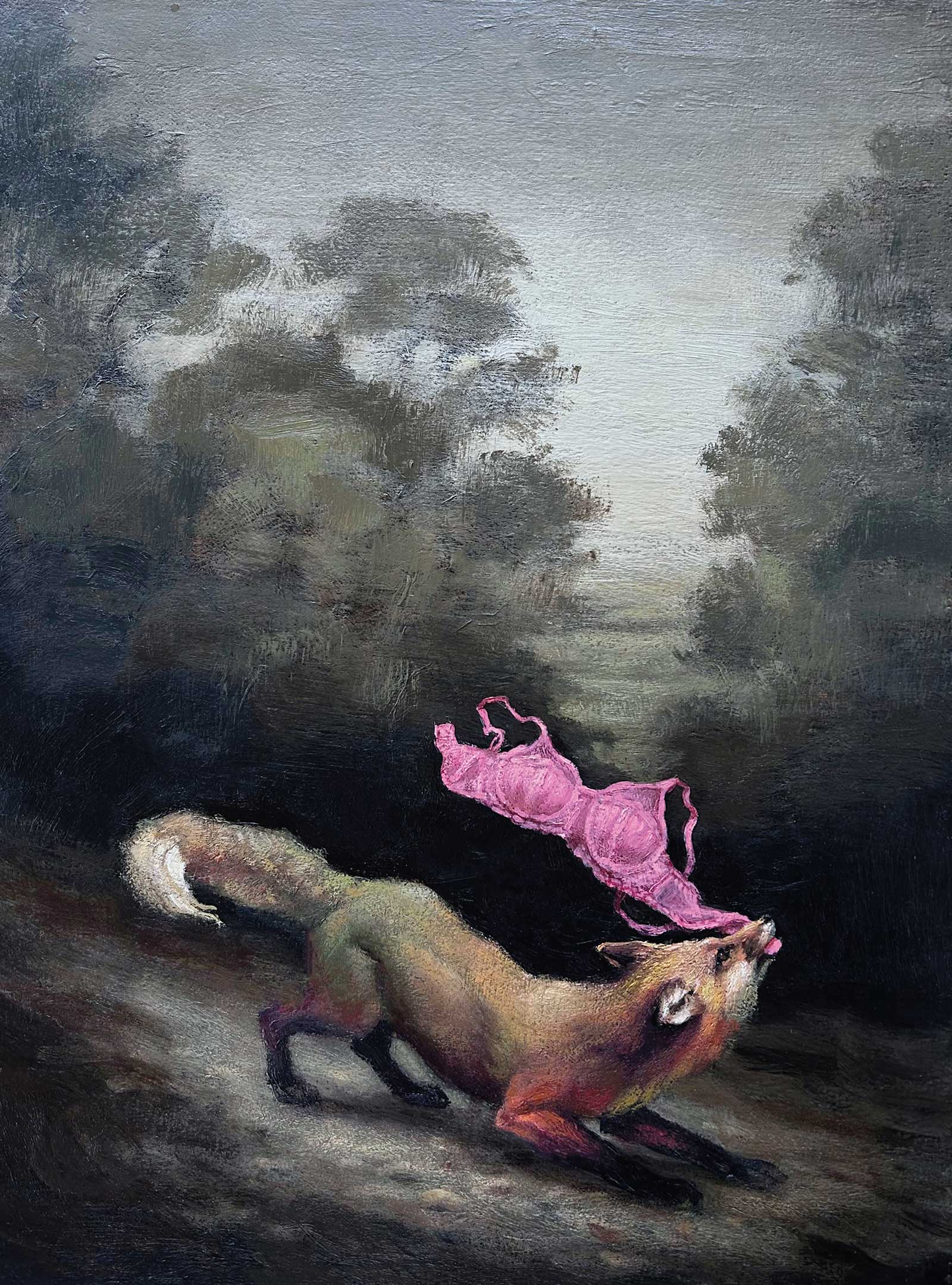
Stage 6 Third and Fourth Passes
Using the indirect method of painting, I alternate light and dark layers of paint. At this stage I brought more paint into play from the original palette, expanding the dark and light color strings to sculpt form within the fox’s body and the general form of the trees and bra. The process of alternating between dark and light until I have reached the effect I am trying to achieve can take countless hours and is the bulk of the work in my paintings. I use my favorite Rosemary & Co. brushes: ivory pointed rounds, ultimate filberts and classic round bristle brushes. The bristle brushes lend a more textural quality to the strokes, and the ivory lays down smoother brushwork.
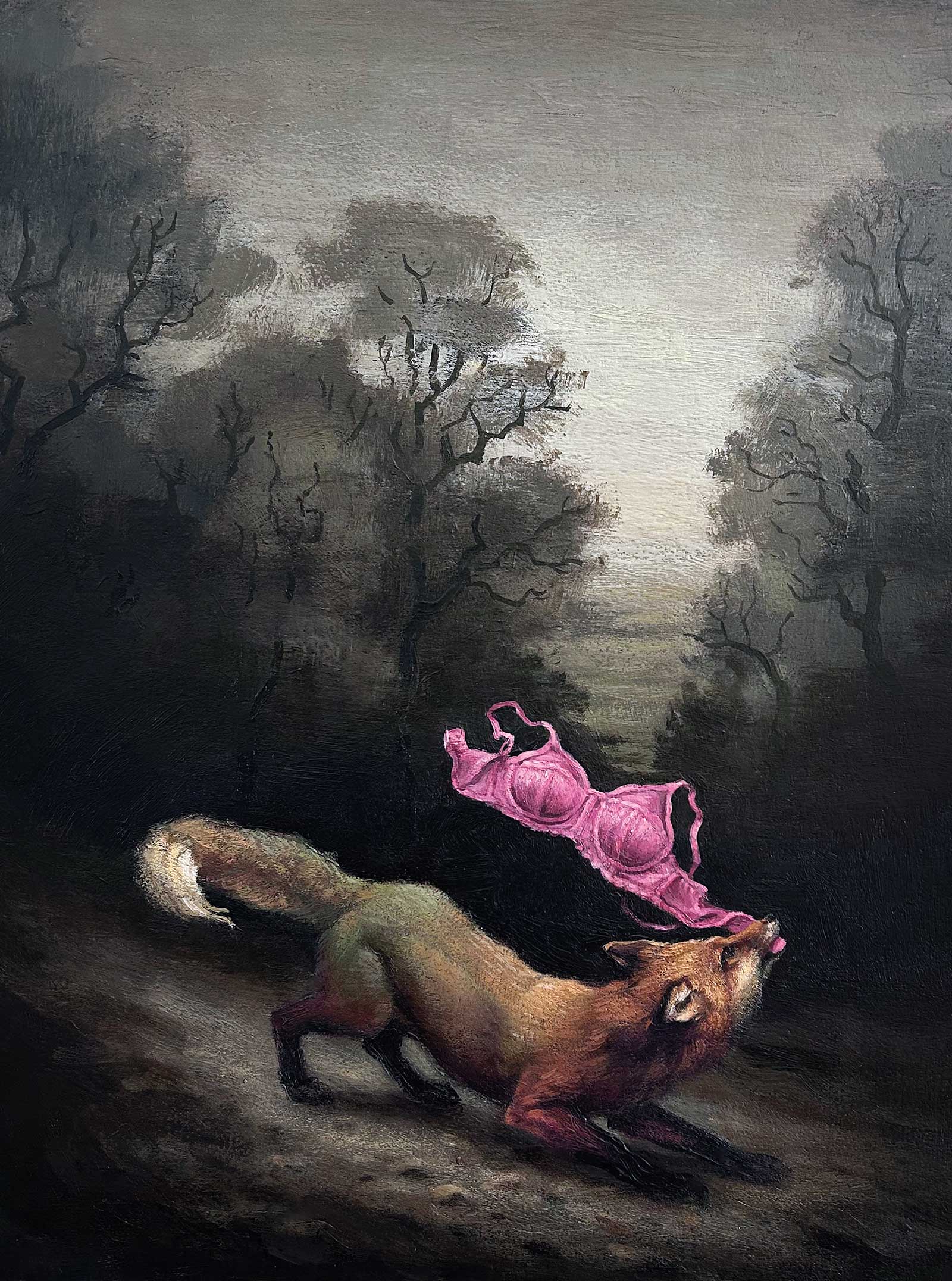
Stage 7 Adding Depth and Detail
Mixing a transparent oxide brown and a little green wash (Payne’s gray and cadmium yellow medium), I layer over the landscape in various spaces to add depth and to replicate the use of the same colors within the fox’s pelt. I add detailed tree branches with small ivory rounds and the darker ends of the mixed landscape color string.
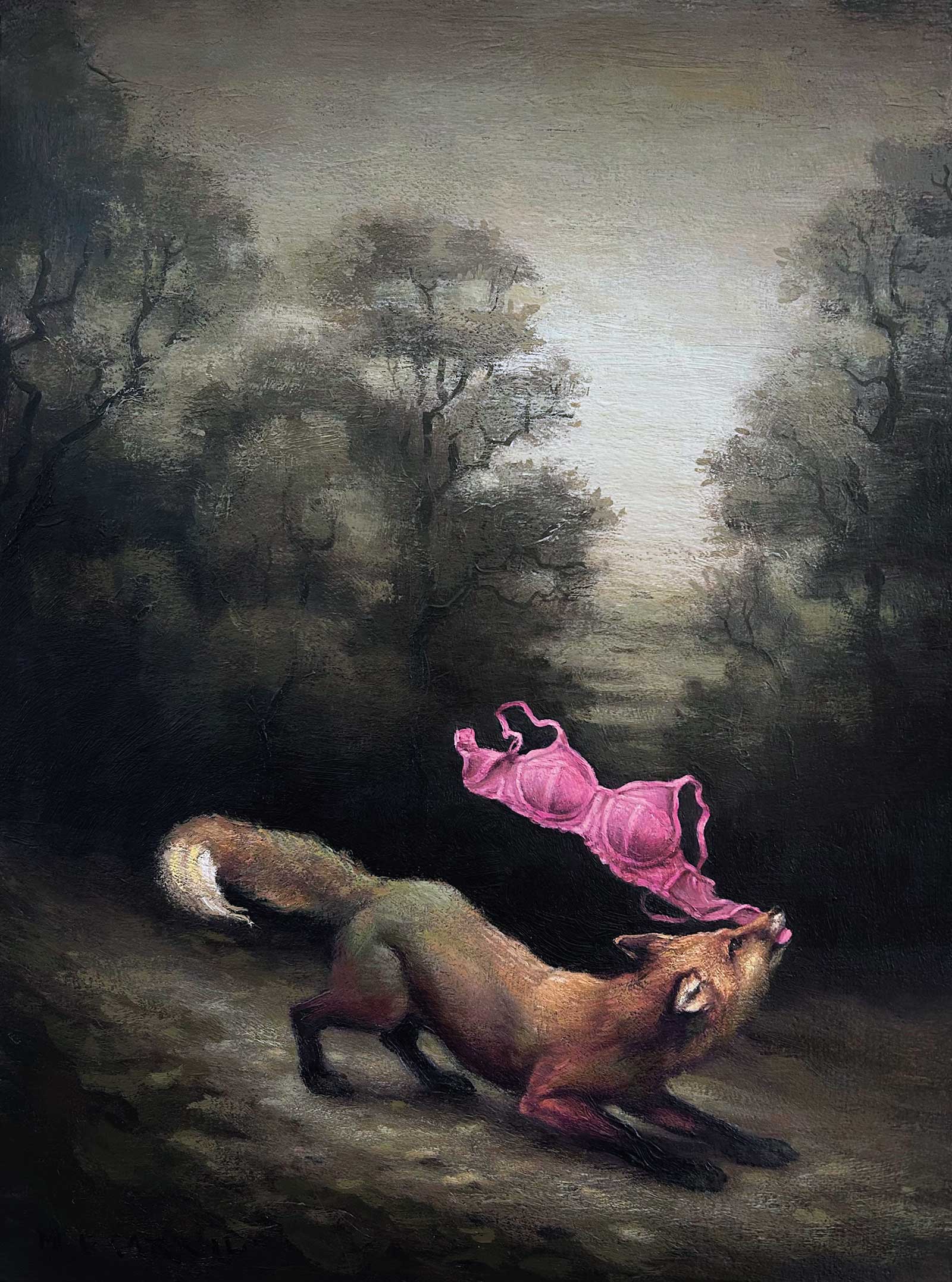
Stage 8 Finished Artwork
The Fox and the Madness of Love, acrylic on ACM panel, 12 x 9” (30 x 22 cm)
Finally, I develop more form throughout the entirety of the painting, revisiting areas that want to become more finished by shifting between my darks and lights again. Once I am “done” with a painting, I will sit with it for a few days, observing it in the changing light of the day and making minor modifications before I set out to photograph the work.
About the artist
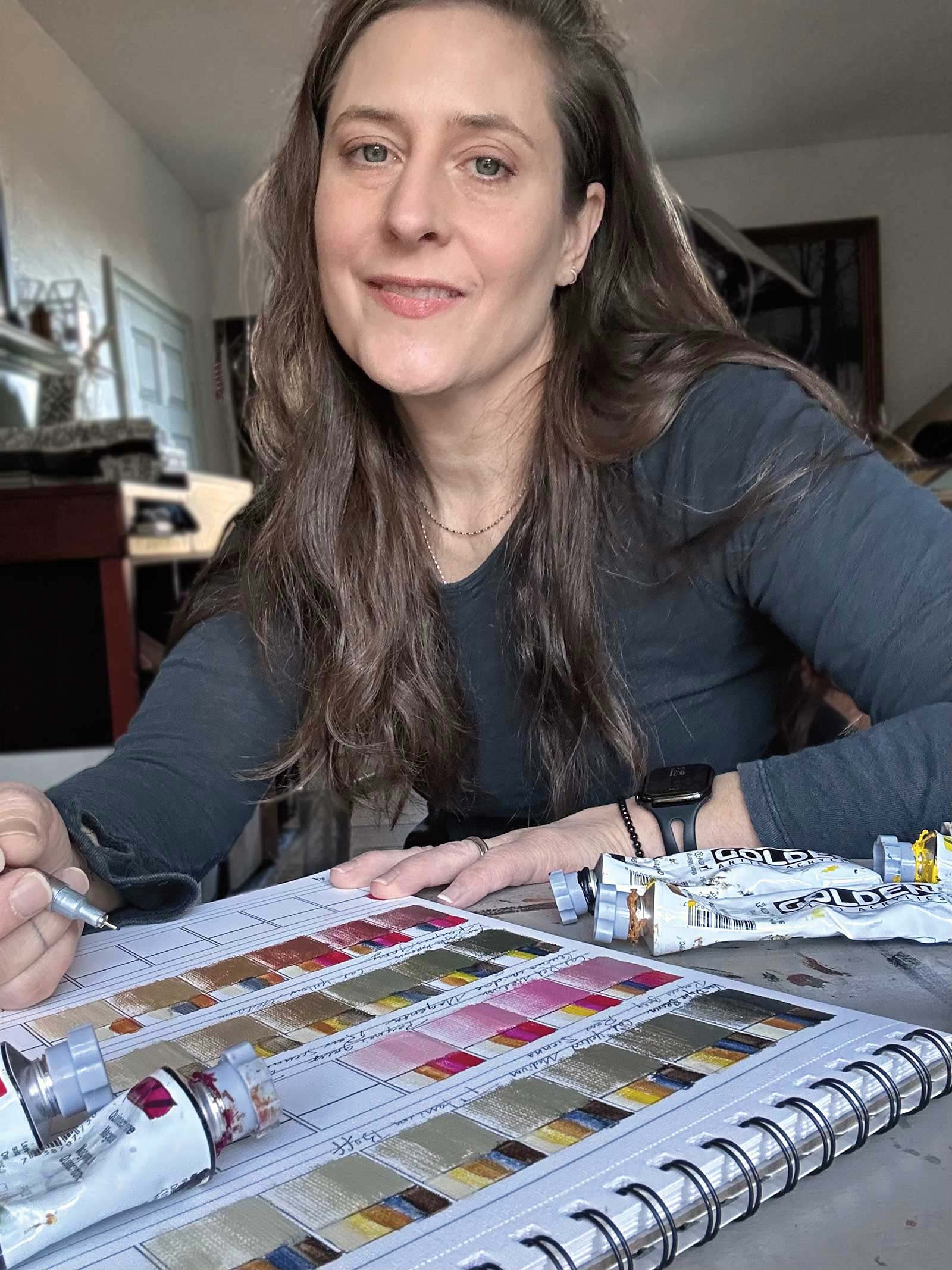 Mary Carroll
Born in 1979 in rural West Virginia, Mary Carroll spent her youth helping her family work their farmland in an isolated area. She had no television or other modern distractions and was encouraged to entertain herself with objects in nature. Left with the workings of her imagination and observations of the world around her, she translated her understanding into paintings and narratives. She continues this practice today, gaining much of her creativity from the natural world. Her paintings and drawings offer a narrative that echoes a provocative daydream, communicating both the human disposition and our relationship to the land.
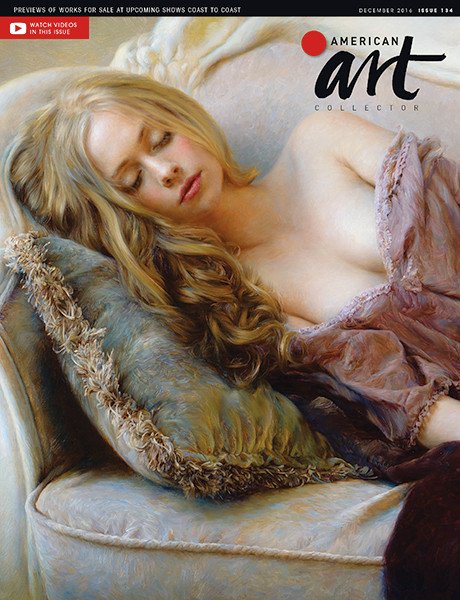
Carroll received a Master of Fine Arts degree in painting and art history from Radford University, graduating summa cum laude in 2010, and was awarded the university’s best graduate thesis. Her work is in the permanent collections of the New Salem Museum of Fine Art in Salem, Massachusetts, and the Taubman Museum of Art in Roanoke, Virginia. Her works have been collected and published worldwide. She has received awards from the Portrait Society of America, the International ARC Salon, the Bold Brush Award, as well as International Artist’s People & Figures competition. You can also find her work in sister publication American Art Collector. She lives and works in Ashland, Virginia.
Represented by
RJD Gallery, Michigan, USA, rjdgallery.com
Abend Gallery, Colorado, USA, abendgallery.com
Lovetts Gallery, Oklahoma, USA, lovettsgallery.com
Contact at
merrysee.com